


Medically Reviewed | Updated June 2026
Many people searching “Can you inject Valium?” are trying to understand whether Valium is available as an injectable medication, whether it is safe to inject, or what happens when someone injects the drug improperly.
The answer depends on the situation.
While Valium (diazepam) can be administered by injection in medical settings, injecting Valium outside of professional supervision can be extremely dangerous. Attempting to inject crushed tablets or misuse injectable diazepam can lead to serious health complications, overdose, infection, and addiction.
Understanding the difference between medical use and misuse is essential for protecting your health and recognising when professional help may be needed.
Quick Answer
Yes, Valium can be injected in certain medical situations by trained healthcare professionals.
However:
- Injectable Valium is intended for medical use only.
- Injecting crushed Valium tablets is extremely dangerous.
- Improper injection can cause vein damage, infection, overdose, and other serious complications.
- Misusing injectable diazepam may increase the risk of benzodiazepine addiction.
If you or someone you know is injecting Valium outside of medical supervision, professional treatment may be necessary to address potential substance use concerns.
What Is Valium?
Valium is the brand name for diazepam, a benzodiazepine medication commonly prescribed to treat:
- Anxiety disorders
- Muscle spasms
- Seizure disorders
- Alcohol withdrawal symptoms
- Certain medical procedures requiring sedation
Valium works by increasing the effects of gamma-aminobutyric acid (GABA), a neurotransmitter that helps calm activity in the brain and nervous system.
Because of its calming and sedative effects, Valium has legitimate medical uses but also carries a risk of misuse and dependence.
If you’re interested in learning more about how diazepam affects the body, read our guide on How Long Does Diazepam Last?
Can Valium Be Injected?
Yes.
Diazepam is available in an injectable form and may be administered by healthcare professionals in hospitals, emergency departments, and other medical settings.
Medical providers may administer intravenous (IV) diazepam for:
- Seizure emergencies
- Severe anxiety or agitation
- Alcohol withdrawal complications
- Muscle spasms
- Sedation before certain procedures
In these situations, injectable diazepam is carefully monitored to reduce the risk of complications.
What Is Injectable Valium?
Injectable Valium is a prescription formulation specifically designed for intravenous (IV) or intramuscular (IM) administration under medical supervision.
It differs significantly from oral Valium tablets.
Healthcare professionals use injectable diazepam because it works more quickly than oral medications, making it useful during emergencies where rapid symptom control is needed.
Injectable Valium should never be used without medical supervision.
Why Do Hospitals Use Intravenous Valium?
Hospitals may use IV Valium because it enters the bloodstream quickly and produces faster effects than oral medications.
Common uses include:
Seizure Management
Diazepam may be used to stop prolonged seizures or seizure emergencies.
Alcohol Withdrawal
Severe alcohol withdrawal can be dangerous and sometimes life-threatening. Diazepam may be used to reduce withdrawal symptoms and prevent complications.
Acute Anxiety or Agitation
In emergency situations, IV diazepam may help calm severe anxiety or agitation.
Medical Procedures
Some procedures require sedation or muscle relaxation, and injectable diazepam may be part of the treatment plan.
Can You Crush Valium and Inject It?
No.
Crushing Valium tablets and attempting to inject them is extremely dangerous.
Oral tablets are not designed to be injected.
Even if the active ingredient is diazepam, tablets contain fillers and inactive ingredients that are not meant to enter the bloodstream.
Injecting crushed tablets can lead to:
- Blood vessel damage
- Blocked blood vessels
- Severe infections
- Tissue damage
- Organ complications
- Overdose
Many serious medical emergencies related to drug misuse occur because people inject medications that were never intended for injection.
What Happens If Someone Injects Crushed Valium?
Injecting crushed Valium tablets can have severe consequences.
Potential complications include:
Vein Damage
Insoluble tablet particles can irritate and damage veins, leading to inflammation and circulation problems.
Infection
Injecting medications improperly increases the risk of bacterial infections, abscesses, and bloodstream infections.
Tissue Damage
Improper injection techniques can damage surrounding tissues and muscles.
Blood Clots
Particles from crushed tablets can block blood vessels and increase the risk of serious complications.
Overdose
Injecting diazepam can produce rapid effects that increase the risk of overdose, especially when combined with alcohol, opioids, or other sedatives.
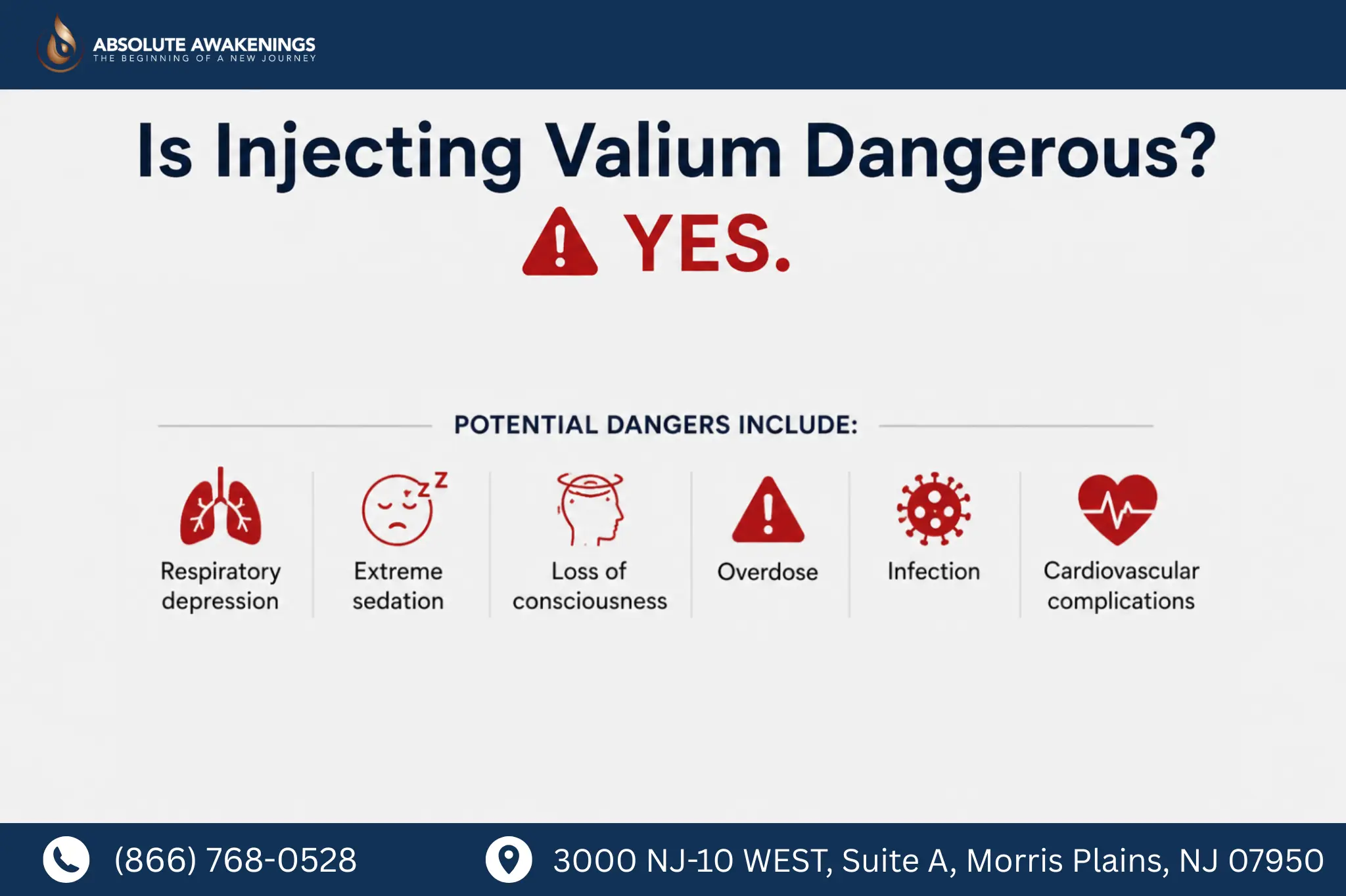
Is Injecting Valium Dangerous?
Yes.
Even when injectable diazepam is used in medical settings, healthcare providers carefully monitor dosage, breathing, blood pressure, and overall safety.
When Valium is injected outside of medical supervision, the risks increase significantly.
Potential dangers include:
- Respiratory depression
- Extreme sedation
- Loss of consciousness
- Overdose
- Infection
- Cardiovascular complications
The risk becomes even greater when Valium is combined with other substances.

Can Injecting Valium Cause an Overdose?
Yes.
Valium overdose can occur when large amounts are used or when diazepam is combined with substances such as:
- Alcohol
- Opioids
- Sleep medications
- Other benzodiazepines
Warning signs of overdose may include:
- Extreme drowsiness
- Slowed breathing
- Confusion
- Loss of consciousness
- Unresponsiveness
An overdose is a medical emergency and requires immediate treatment.
Is Injecting Valium a Sign of Addiction?
Not always, but it can be a warning sign.
Injecting a medication prescribed in tablet form often indicates a higher-risk pattern of substance misuse.
Signs of Valium misuse may include:
- Taking higher doses than prescribed
- Seeking multiple prescriptions
- Crushing or altering medication
- Using Valium to get high
- Combining Valium with other substances
- Experiencing cravings
- Difficulty stopping use
If these behaviors are present, professional evaluation may be beneficial.
Help Is Available for Valium Addiction
Misusing Valium can quickly lead to physical dependence, overdose risks, and serious health consequences. If you are concerned about your use of Valium or other prescription medications, our experienced treatment team can help you explore safe, effective recovery options and take the first step toward lasting wellness.
Treatment for Valium Addiction
Benzodiazepine dependence can develop even when medications are initially used as prescribed.
Treatment often includes:
- Medical detox
- Individual therapy
- Group counseling
- Relapse prevention planning
- Dual diagnosis treatment
At Absolute Awakenings, we provide evidence-based care for individuals struggling with benzodiazepine misuse, prescription drug addiction, and co-occurring mental health disorders.
Learn more about our Prescription Drug Addiction Treatment Program:
https://absoluteawakenings.com/what-we-treat/substance-abuse/prescription-drugs/
Individuals experiencing withdrawal symptoms may also benefit from our Detox Placement Program:
https://absoluteawakenings.com/treatment-programs/detox-placement/
When Should You Seek Help?
Professional help may be needed if:
- You are injecting Valium outside of medical supervision
- You feel unable to stop using diazepam
- You experience cravings
- You combine Valium with other substances
- Your substance use is affecting work, relationships, or health
Our Dual Diagnosis Treatment Program can help individuals struggling with both substance use and mental health challenges.
https://absoluteawakenings.com/treatment-programs/dual-diagnosis/
Frequently Asked Questions
Can Valium be given IV?
Yes. Healthcare professionals may administer IV diazepam in hospitals and emergency settings.
Is injectable Valium different from tablets?
Yes. Injectable diazepam is a medical formulation specifically designed for injection, while tablets are intended for oral use only.
Can you crush Valium tablets?
Valium tablets can be crushed for certain approved oral uses if directed by a healthcare provider, but they should never be injected.
Is injecting Valium dangerous?
Yes. Injecting Valium outside of medical supervision can lead to infection, overdose, vein damage, and other serious complications.
Can injecting diazepam cause an overdose?
Yes. Overdose risk increases when diazepam is injected improperly or combined with other substances.
Is Valium safe?
Valium can be safe when used exactly as prescribed under medical supervision. Misuse significantly increases the risk of complications.
Get Help for Valium Misuse and Addiction
If Valium use is affecting your health, relationships, work performance, or overall quality of life, professional help is available.
Absolute Awakenings provides compassionate, evidence-based treatment for benzodiazepine addiction, prescription drug misuse, and co-occurring mental health disorders.
Call (844) 967-1758 today for a confidential consultation.
Contact Us:
https://absoluteawakenings.com/contact-us/
Verify Insurance:
https://absoluteawakenings.com/verify-benefits/
Related Articles
- How Long Does Diazepam Last?
- Is Xanax a Narcotic? Facts, Classification, and Withdrawal
- Why Am I So Tired After Stopping Adderall?
- Can You Get Addicted to Vyvanse?
References
- U.S. Food and Drug Administration (FDA). Diazepam Injection Prescribing Information.
- National Institute on Drug Abuse (NIDA). Benzodiazepines and Prescription Drug Misuse.
- Substance Abuse and Mental Health Services Administration (SAMHSA). Treatment Resources.
- National Library of Medicine. Diazepam Drug Information.
- Mayo Clinic. Diazepam Uses and Safety Information.
Medical Disclaimer
The information provided in this article is for educational purposes only and should not replace professional medical advice, diagnosis, or treatment. If you have questions about Valium, diazepam, or benzodiazepine use, consult a qualified healthcare professional.