
Many people taking medications like Xanax or Valium do not realize how difficult stopping them can become until symptoms begin. Anxiety, sleep disturbances, or shakiness can quickly escalate to a more serious issue. Many people have questions regarding the benzodiazepine withdrawal symptoms as they are not sure what is occurring when the body becomes reliant on benzodiazepines.
Addictions specialists and doctors advise against abruptly discontinuing benzodiazepines after prolonged use, as this can trigger severe physical or emotional responses. Sometimes withdrawal can turn dangerous, and an emergency medical response is necessary, particularly if seizures or breathing problems occur.
Absolute Awakenings helps individuals understand substance dependence and recovery, offering support and guidance for people working through withdrawal and long-term healing.
Objective
This blog will explain the stages of benzodiazepine withdrawal and how they can occur, the risks of benzodiazepine withdrawal, the recovery timeline, and when a person may need professional assistance to help them withdraw from benzodiazepines in a safer and more stable manner.
Key Takeaways
- Benzodiazepine withdrawal can affect both the body and mind, with symptoms ranging from anxiety and insomnia to more serious medical concerns.
- Withdrawal from benzodiazepines can occur not just physically, but also psychologically, resulting in symptoms such as anxiety, insomnia, and even more serious medical issues.
- Suddenly stopping medications like Xanax or Valium may increase the risk of seizures and other dangerous complications.
- Medical supervision can help lower the potential risks of withdrawal and help manage symptoms during detox.
- People may take some time to recover but with support and care, they can experience withdrawal more safely.
Why Benzodiazepine Withdrawal Can Become Dangerous
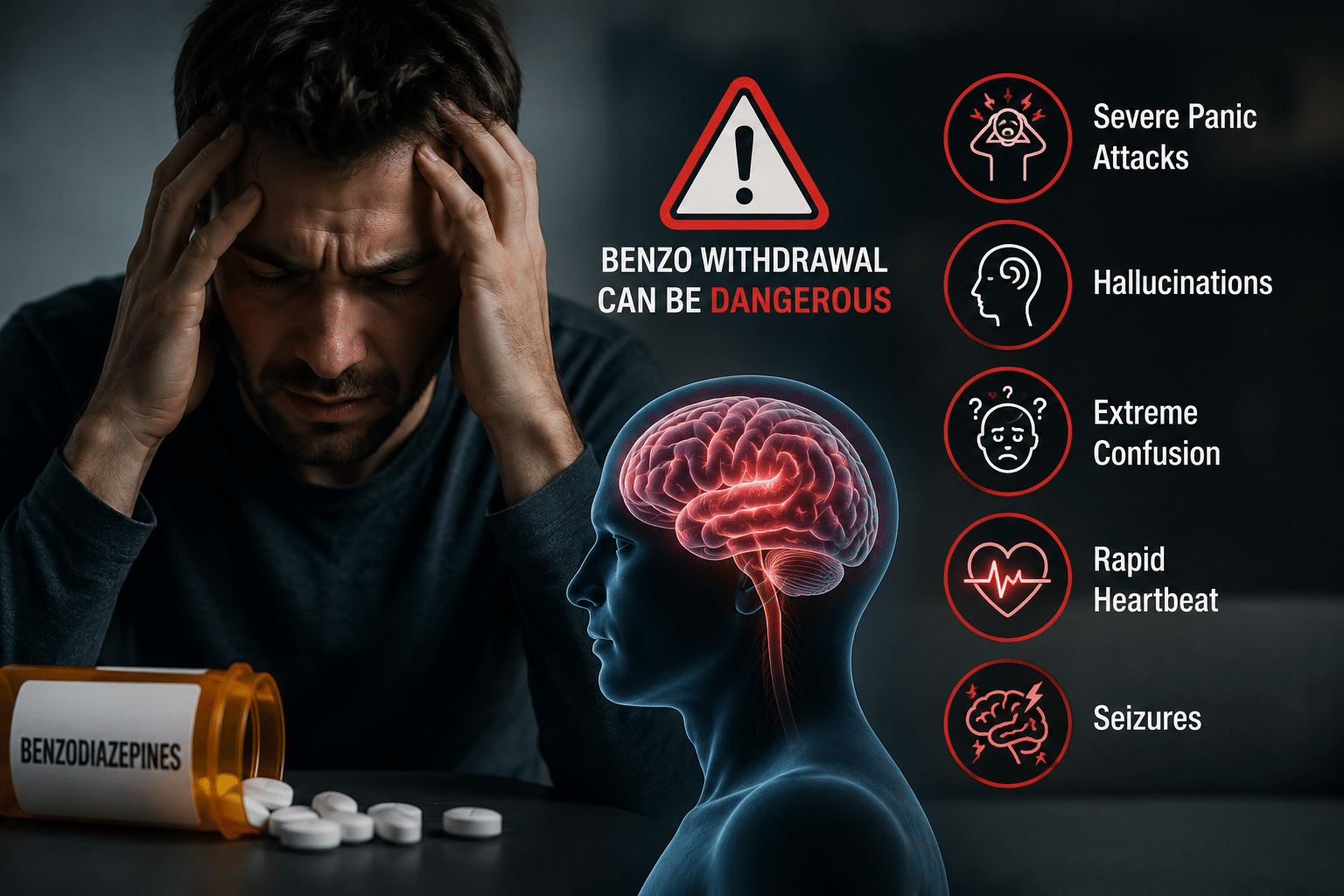
Benzodiazepines reduce the function of the brain and nervous system. With extended use, the body gets used to having the medicine in it on a regular basis. The brain may have a difficult time readjusting itself when the drug is suddenly stopped.
This is why many people ask, is benzo withdrawal dangerous? In certain circumstances, it may be. Withdrawal can impact heart rate, respiration, mood, and nervous system activity.
Others might have:
- Severe panic attacks
- Hallucinations
- Extreme confusion
- Rapid heartbeat
- Seizures
The danger may be increased if a person abruptly discontinues a drug rather than gradually decreasing over time.
What is the Benzodiazepine Withdrawal?
When the body detects that the drug is no longer in the system, withdrawal occurs. Benzodiazepines interact with chemicals that are associated with relaxation and calmness; the nervous system may become hyperactive when the use of benzodiazepines has been discontinued.
Common benzo detox symptoms are:
- Anxiety or panic
- Trouble sleeping
- Sweating
- Tremors
- Nausea
- Irritability
- Muscle pain
- Sensitivity to light or sound
Some people experience mild discomfort, while others go through stronger physical and emotional symptoms that interfere with daily life.
Benzodiazepine Withdrawal Stages Explained
The benzodiazepine withdrawal stages may differ according to the class of benzodiazepines used, as well as doses and duration of use. However, many people go through a similar pattern during recovery.
| Stage | Timeline | Common Symptoms |
|---|---|---|
| Early Withdrawal | 6 to 24 hours | Anxiety, restlessness, sleep problems |
| Acute Withdrawal | Days 2 to 7 | Panic, nausea, tremors, sweating |
| Peak Symptoms | Week 1 to 2 | Strong cravings, emotional distress, confusion |
| Ongoing Recovery | Weeks or months | Mood swings, sleep issues, lingering anxiety |
The benzodiazepine withdrawal timeline can vary from person to person, particularly if more than one substance is part of the withdrawal.
Withdrawal from Xanax and Valium
Withdrawal symptoms may vary depending on the drug, as Xanax and Valium have differing durations of action.
Xanax leaves the body more quickly, which means symptoms may begin faster and sometimes feel more intense during the early stages. That’s one of the reasons why many individuals look into the Xanax withdrawal timeline prior to attempting to end their use.
However, symptoms of withdrawal may start to occur over a longer period of time, as the Valium will stay in the body for a longer time.
Factors that may affect withdrawal severity include:
- Length of use
- Dosage amount
- Age and health condition
- Taking drugs or alcohol with medicine
- Mental health history
Severe Withdrawal Symptoms You Should Never Ignore
Withdrawal symptoms should never be ignored as they may indicate a medical emergency. Extreme benzo withdrawal symptoms can be life-threatening if left untreated.
Signs and symptoms might include:
- Seizures
- Chest pain
- Hallucinations
- Trouble breathing
- Severe confusion
- Loss of consciousness
If these symptoms happen, emergency medical attention may be necessary right away.
Why Stopping Without Help Can Be Risky
People often attempt to discontinue benzodiazepines independently because they are embarrassed or think the withdrawal process is not that intense. Unfortunately, it is possible that suddenly giving up can pose a greater risk for physical and mental health.
The body often needs time to adjust to lower medication levels slowly.Without support, cravings, panic, sleep problems, and fear can become difficult to manage. Some people return to use quickly just to stop the discomfort.
This is one reason medical detox for benzodiazepines is often recommended during recovery.
How Medical Detox Can Help
Detox programs are intended to assist people to withdraw in a more secure fashion, while any symptoms are carefully monitored. Doctors can slowly cut back on medicine doses, and provide support for physical and emotional side effects.
Some of the support during detox might consist of:
- Symptom monitoring
- Gradual tapering schedules
- Emotional support
- Sleep support
- Medical care if complications appear
Medical benzodiazepines detox programs in New Jersey can also assist people in preparation for long-term recovery following the completion of medical detox.
When It May Be Time to Seek Professional Help

For others, the withdrawal symptoms start to impact functioning or become unmanageable, and so extra support is needed.
There are indicators that professional care might be necessary:
- Failed attempts to quit
- Severe anxiety during withdrawal
- Panic attacks
- Strong cravings
- Symptoms getting worse over time
Seeking help early may reduce risks and help individuals feel safer during recovery.
Recovery Takes Time, but Healing Is Possible
After benzodiazepine use, the nervous system will not recover quickly. Some people start to feel better in weeks, others more emotional symptoms last for longer.
Sleep patterns, stress levels, and mood may improve gradually over time as the brain continues adjusting. Support during this time can ensure that people remain focused on recovery and stability in day-to-day living.
Start Healing with Safe and Supportive Benzo Care
Benzo withdrawal can feel physically and emotionally exhausting, especially when symptoms start affecting sleep, mood, and daily routines. Getting the right support during this time can help make the process feel safer and easier to manage. Absolute Awakenings provides care, guidance, and recovery support for individuals working toward healthier daily living and long-term healing.
Benzo withdrawal can feel physically and emotionally exhausting, especially when symptoms start affecting sleep, mood, and daily routines. Getting the right support during this time can help make the process feel safer and easier to manage. Absolute Awakenings provides care, guidance, and recovery support for individuals working toward healthier daily living and long-term healing.
Conclusion
Benzodiazepine withdrawal can become serious when symptoms are ignored or managed without proper care. While some people experience mild discomfort, others may face physical and emotional symptoms that feel frightening or unsafe.
Understanding the stages of withdrawal and knowing when to seek support can help reduce risks during recovery. Absolute Awakenings offers guidance and care for individuals looking to move toward healthier daily living and long-term healing.
Ready to begin recovery in a safer and more supportive environment? Taking the first step today could help you move toward greater stability, better health, and a stronger future.
FAQs
What are common benzo withdrawal symptoms?
Common symptoms may include anxiety, insomnia, sweating, tremors, nausea, panic attacks, and mood changes.
Is benzo withdrawal dangerous?
Yes, withdrawal can become dangerous in some situations, especially if benzodiazepines are stopped suddenly after long-term use.
How long does benzodiazepine withdrawal last?
Withdrawal may last from several days to several weeks, although some emotional symptoms can continue longer.
Can Xanax withdrawal cause seizures?
Yes, severe Xanax withdrawal may increase seizure risk, particularly without medical supervision.
Why is medical detox recommended for benzodiazepines?
Medical detox may help reduce withdrawal risks, monitor symptoms closely, and support safer recovery during detox.