


Diazepam typically starts working within 30 to 60 minutes and its felt effects last 4 to 6 hours. However, due to its long half-life, the drug remains active in the body for days to weeks after you stop feeling it.
Diazepam is one of the most prescribed medications in the world and one of the most misunderstood. People take it for anxiety, muscle spasms, alcohol withdrawal, and seizures. They often have no idea how long it stays active in the body, why it feels so different from dose to dose, or at what point a short-term prescription becomes a long-term problem.
This guide covers all of it. Not just the surface-level facts, but the pharmacology that actually explains your experience, the warning signs worth paying attention to, and what to do if use has crossed a line.
1. Diazepam’s effects last 4 to 6 hours, but its active metabolites remain in the body for days to weeks; these are two different timelines that most patients don’t understand.
What Diazepam Actually Is
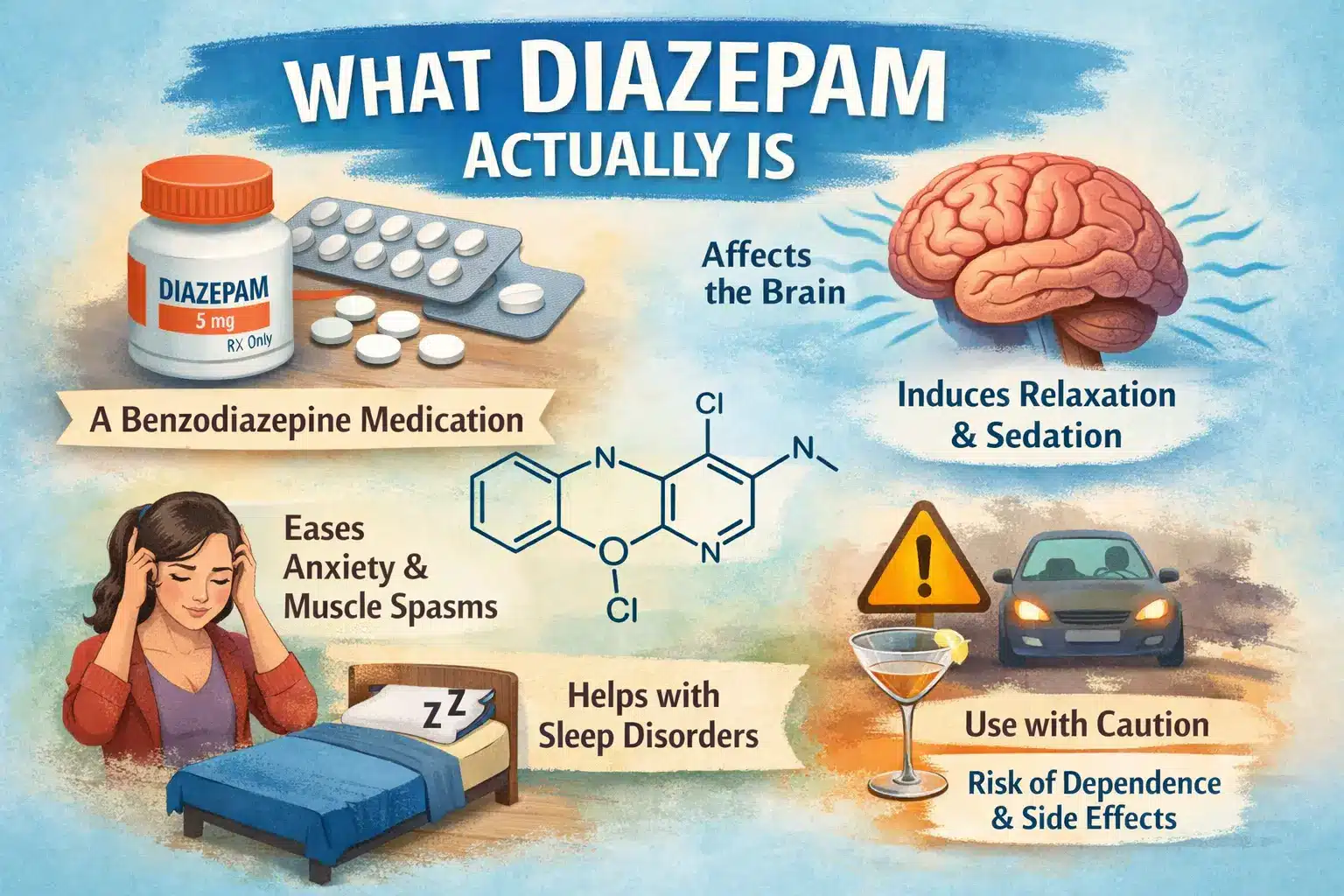
Diazepam belongs to a class of drugs called benzodiazepines. It works by enhancing the effect of gamma-aminobutyric acid (GABA), the brain’s primary inhibitory neurotransmitter. When GABA activity increases, the central nervous system slows down producing the calm, sedated, muscle-relaxed state that diazepam is prescribed to create.
It’s sold under the brand name Valium, though generic versions are far more common today. In some countries including Australia it goes by the name Antenex.
The U.S. Drug Enforcement Administration (DEA) classifies diazepam as a Schedule IV controlled substance. That means it has accepted medical uses but carries a recognized risk of dependence and misuse.
Doctors prescribe it for:
- Generalized anxiety disorder and panic
- Alcohol withdrawal management (particularly to prevent seizures)
- Muscle spasms and spasticity
- Certain types of seizure disorders
- Procedural sedation before surgery or medical procedures
It is not an antidepressant. It treats symptoms, not causes. That distinction matters enormously when thinking about long-term use.
How Long Diazepam Lasts The Real Answer
The question “how long does diazepam last?” doesn’t have a single clean answer. There are two different timelines at play: the effects you feel, and how long the drug remains active in your body at a pharmacological level. These are not the same thing.
Onset of Action
Taken orally, diazepam typically begins working within 15 to 60 minutes. On an empty stomach, absorption is faster. After a heavy meal, it can take longer. Most people notice the anxiolytic (anti-anxiety) effects within 30 to 45 minutes of a standard dose.
Duration of Effects
The felt effects the calm, the muscle relaxation, the reduction in anxious thoughts generally last between 4 and 6 hours. A 2mg dose on the lower end will often wear off closer to 3 to 4 hours. A 10mg dose may keep someone meaningfully sedated for 6 to 8 hours or longer, depending on the person.
What many patients don’t realize is that sedation and therapeutic effect don’t track exactly together. You may feel “back to normal” before the drug has fully cleared your system.
Half-Life: Why Diazepam Is Different from Other Benzos
Here is where diazepam gets clinically complicated. Its half-life the time it takes for blood plasma concentration to reduce by half ranges from 20 to 100 hours. The average is roughly 36 to 48 hours in healthy adults. That is an unusually long half-life, even among benzodiazepines.
But diazepam doesn’t stop there. When your liver metabolizes it, it produces an active metabolite called desmethyldiazepam (also called nordiazepam). That metabolite has its own half-life of 36 to 200 hours.
What this means practically: even after you stop feeling the drug, it continues to depress your central nervous system. This is why diazepam remains detectable in urine for up to 6 weeks in regular users. It’s also why the drug is so effective for alcohol withdrawal a single or twice-daily dose maintains a stable, prolonged sedative effect that prevents withdrawal seizures.
For everyday anxiety management, that same persistence is a liability. The drug accumulates with repeated dosing. By day four or five of daily use, blood levels are still climbing the half-life means the body cannot clear each dose before the next one arrives.
Dose Makes a Significant Difference
A 2mg tablet and a 10mg tablet are the same drug, but they behave very differently in practice.
2mg diazepam is the lowest commonly prescribed dose. It’s often used in elderly patients, anxious patients who are benzo-naive, or as a “when needed” option for mild situational anxiety. At 2mg, sedation is usually mild. Most people find they can function normally, work, drive (though this is not recommended), hold a conversation. The effects typically wear off within 3 to 4 hours.
5mg diazepam is the standard mid-range dose. Effects are noticeably stronger. Some patients describe feeling “floaty” or unusually relaxed. Reaction time slows. Concentration narrows. Duration extends to roughly 4 to 6 hours.
10mg diazepam is a substantial dose for most non-tolerant adults. Sedation is pronounced. At this dose, impaired driving is a genuine risk for hours beyond when the person feels “back to normal.” People who take 10mg regularly develop tolerance, meaning the same dose produces diminishing returns over time and stopping becomes harder.
Is 5mg strong? For someone who has never taken a benzodiazepine, yes meaningfully so. For someone with years of daily use, it may barely register.
Factors That Change How Diazepam Works in Your Body
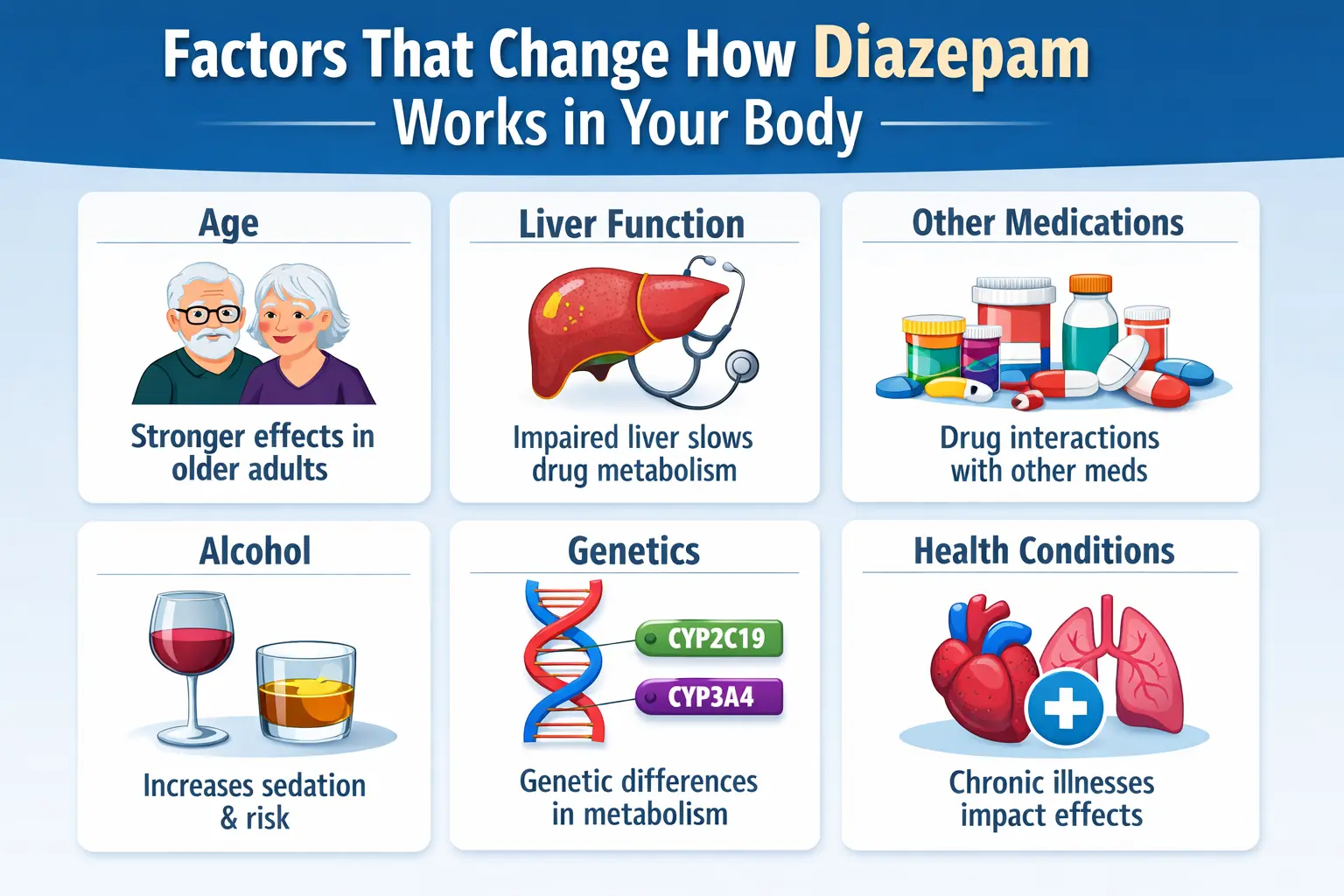
No two people process diazepam identically. Several factors shift both duration and intensity:
Age. Older adults metabolize diazepam more slowly. In someone over 65, the half-life can extend dramatically, sometimes exceeding 100 hours. This is why diazepam is often avoided or used at greatly reduced doses in elderly patients. Fall risk, cognitive impairment, and accidental overdose are all elevated.
Liver health. Diazepam is heavily liver-metabolized. Liver disease whether from alcohol, hepatitis, or other causes can significantly slow clearance and lead to unexpected accumulation.
Body composition. Diazepam is fat-soluble. In people with higher body fat percentage, the drug distributes more widely and takes longer to fully clear the system.
Other medications. Taking diazepam alongside other CNS depressants, opioids, alcohol, antihistamines, certain antidepressants, or sleep aids compounds sedation dangerously. The FDA has issued specific warnings about combining benzodiazepines with opioids.Tolerance. Regular users experience dramatically shorter felt duration over time, even as actual blood levels remain elevated. The subjective “wearing off” happens faster, which drives dose escalation.
Side Effects Worth Knowing
Diazepam’s therapeutic effects and its side effects are two sides of the same pharmacological coin. Because it suppresses CNS activity broadly, the effects are not selective.
Common side effects include drowsiness, impaired coordination, slowed reaction time, memory impairment (particularly for events occurring while under its influence called anterograde amnesia), and reduced inhibition.
Less commonly: paradoxical agitation, hostility, or increased anxiety. This happens in some patients particularly those with certain psychiatric conditions where GABA enhancement produces the opposite of the intended calming effect. It’s more common in children and elderly patients but can occur in any age group.
At higher doses or in combination with other depressants, the risks escalate to respiratory depression, unconsciousness, and death. Diazepam alone is rarely fatal in overdose the respiratory depression ceiling is relatively high. Diazepam combined with alcohol or opioids is a different and far more dangerous situation.
Diazepam and Dependence: What the Research Actually Shows
Physical dependence can develop within two to four weeks of daily use. This is not a character flaw. It is a predictable pharmacological outcome. The brain adapts to artificially elevated GABA activity by reducing its own GABA production and increasing excitatory signaling as a compensatory response.
When the drug is removed, that compensation is suddenly unmasked producing what is clinically called benzodiazepine withdrawal. Symptoms include intense anxiety (often worse than the original condition), insomnia, sweating, tremor, and in severe cases, seizures.
Benzodiazepine withdrawal can be medically dangerous. Unlike opioid withdrawal, which is extremely unpleasant but rarely fatal, benzo withdrawal carries a genuine risk of life-threatening seizures. This is why medical detox from benzodiazepines is not optional; it is the standard of care for anyone with significant physical dependence.
Diazepam is actually sometimes used in medical detox protocols for other benzodiazepines and for alcohol withdrawal, precisely because of its long half-life and smooth taper characteristics. The same property that makes it dangerous to stop suddenly makes it a useful tool in structured discontinuation.
Diazepam vs. Valium: Are They Different?
No. Valium is just the brand name under which Roche first marketed diazepam. The active molecule is chemically identical. Generic diazepam contains the same compound at the same strength. If you’ve been prescribed 5mg Valium and your pharmacy gives you 5mg diazepam, you have received the equivalent medication.
How Long Does Diazepam Stay in Your System?
Detection windows vary by test type and the individual’s usage pattern:
| Test Type | Approximate Detection Window |
|---|---|
| Urine | 3–6 weeks (heavy users); 3–7 days (single dose) |
| Blood | 6–48 hours |
| Saliva | 1–10 days |
| Hair follicle | Up to 90 days |
Occasional users clear the drug far more quickly than regular users. Someone who has taken diazepam daily for months will test positive long after someone who took a single dose.
When Use Becomes Dependency And What Recovery Looks Like
Most people who are prescribed diazepam use it appropriately. But the risk of sliding from prescription use to problematic dependency is real, particularly with extended prescriptions or when the drug is used for stress management rather than an acute medical condition.
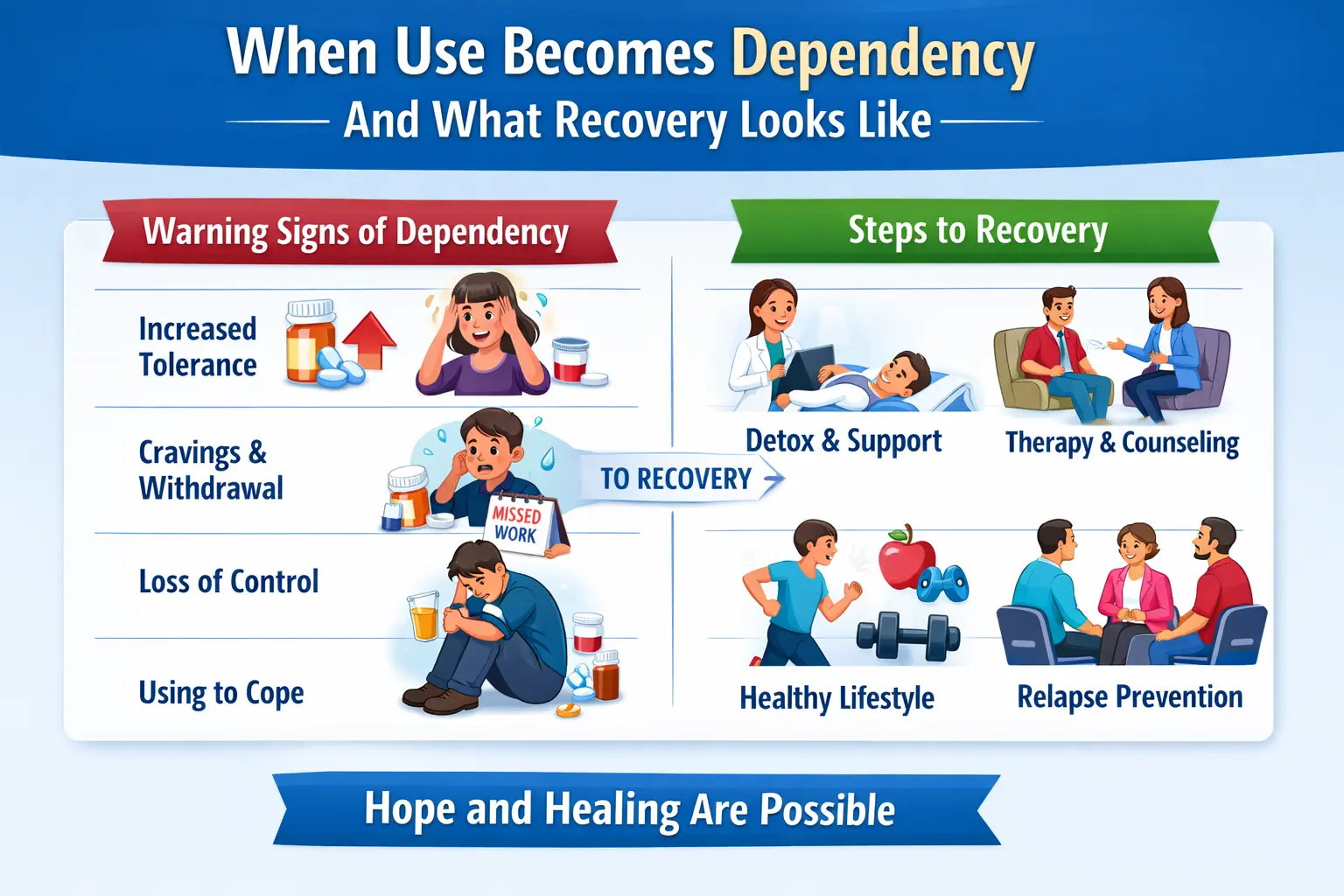
Signs that use has become problematic include taking larger doses than prescribed, using the drug to cope with situations that weren’t in the original prescription, inability to stop despite wanting to, or experiencing anxiety between doses (which may signal early withdrawal rather than the return of the original condition).
If you recognize this pattern, the worst thing to do is stop abruptly. The right step is to seek a medical evaluation.
Treatment for benzodiazepine dependency typically begins with a supervised taper often using diazepam itself as the taper agent because of its long half-life. For people with severe dependency, medical detox programs provide 24-hour monitoring to manage withdrawal safely.
After detox, most people benefit from structured therapy. Research-backed addiction therapies including cognitive behavioral therapy (CBT) address the anxiety or other conditions that diazepam was originally prescribed for this time without creating chemical dependency.
For some people, an emotional support animal can provide companionship, comfort, and a sense of routine during recovery. An ESA letter may help individuals who qualify for an emotional support animal receive the appropriate documentation for their needs. The Supportive Pet offers ESA letters for those seeking this type of support, complementing-not replacing-professional treatment and recovery support.
Understanding how benzodiazepines affect the brain can also help people make sense of what they experienced during dependency and what recovery asks of the nervous system.
For those dealing with co-occurring alcohol use alongside benzodiazepine dependency a combination that significantly raises risk understanding the dangers of mixing benzos and alcohol is a critical part of treatment.
Some people require more structure during early recovery. Outpatient rehab programs allow individuals to receive clinical support while maintaining their daily lives. Others may benefit from a partial care approach that provides more intensive daily support without residential placement.
References
- U.S. Drug Enforcement Administration Drug Fact Sheet: Benzodiazepines
- U.S. National Library of Medicine (MedlinePlus) Diazepam
- Food and Drug Administration FDA Drug Safety Communication: Risks from Combining Opioids and Benzodiazepines
- Substance Abuse and Mental Health Services Administration (SAMHSA) Clinical Practice Guideline for the Treatment of Benzodiazepine Dependence
- National Institute on Drug Abuse (NIDA) Benzodiazepines and Opioids
- PubChem Diazepam Compound Summary (NIH)
If diazepam use has become something you’re struggling to control, or if someone you care about seems dependent on it, a confidential conversation with a treatment specialist is a good first step. Absolute Awakenings offers evidence-based support for benzodiazepine dependency reach out to learn what recovery can look like for your specific situation.