



Stopping antidepressants can raise many questions, especially for those preparing for a change in their routine or supporting someone through it. Many people begin researching what to expect during this phase, including concerns about symptoms and recovery time, which is why questions like how long does lexapro withdrawal last often come up. The experience can vary from person to person, with some noticing mild changes while others go through a more noticeable adjustment period.
Did you know that clinical observations linked to medications like Lexapro show that stopping too quickly can lead to discontinuation symptoms because the brain needs time to rebalance serotonin levels? This highlights the importance of gradual changes and proper guidance during the process.
Absolute Awakenings provides support and guidance for individuals navigating medication changes, helping them better understand withdrawal effects and move through recovery more safely.
Objective
This blog explains Lexapro withdrawal duration, highlights common symptoms, and shares helpful tips to ease discomfort while helping readers understand safe ways to manage the withdrawal process.
Key Takeaways
- Lexapro withdrawal can last from days to several weeks
- Symptoms usually peak in the first one to two weeks
- Gradual tapering helps reduce discomfort
- Some symptoms may last longer in certain cases
- Support and guidance improve recovery outcomes
What Is Lexapro Withdrawal?
Lexapro withdrawal happens when someone stops or reduces their dose after regular use. Since the medication affects brain chemistry, the body needs time to adjust when it is no longer present.
This adjustment can lead to temporary physical and emotional symptoms. It is similar in some ways to experiences reported with Ambien withdrawal symptoms, where the brain reacts to the absence of a substance it has adapted to.
How Long Does Lexapro Withdrawal Last?
The lexapro withdrawal timeline can vary depending on how long the medication was used, the dosage, and individual health factors.
Here is a general timeline most people experience:
| Time Frame | What to Expect |
|---|---|
| 1 to 3 days | Early symptoms begin such as dizziness, mood changes, and irritability |
| 1 to 2 weeks | Symptoms peak including anxiety, fatigue, and sleep disturbances |
| 2 to 4 weeks | Symptoms begin to ease gradually |
| 1 month or more | Some lingering symptoms like low mood or sensitivity may continue |
While many people feel better within a few weeks, others may take longer to adjust fully.
Common Lexapro Withdrawal Symptoms
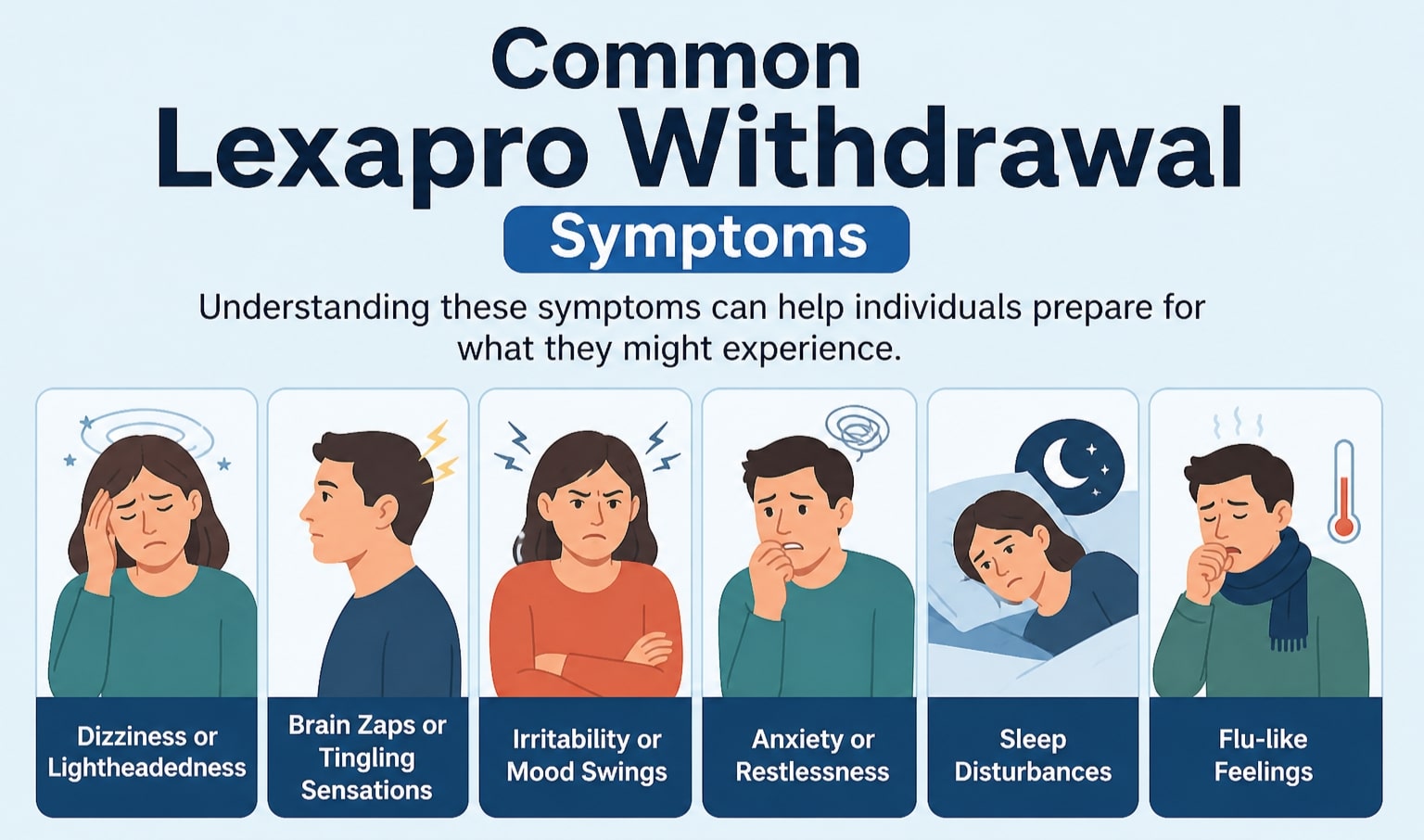
Understanding lexapro withdrawal symptoms can help individuals prepare for what they might experience.
- Dizziness or lightheadedness
- Brain zaps or tingling sensations
- Irritability or mood swings
- Anxiety or restlessness
- Sleep disturbances
- Flu-like feelings
These symptoms can vary in intensity and duration from person to person.
What Makes Withdrawal Last Longer?
Several factors can affect how long withdrawal symptoms continue:
- Long-term use of the medication
- Higher dosage before stopping
- Stopping suddenly instead of tapering
- Individual body chemistry
- Existing mental health conditions
Being aware of these factors can help set realistic expectations.
Why Tapering Lexapro Slowly Is Important
Stopping Lexapro suddenly can increase the intensity of withdrawal symptoms. This is because the brain needs time to adjust to changes in serotonin levels. A gradual reduction allows the body to adapt more comfortably.
Tapering is often recommended by health professionals to reduce the risk of strong withdrawal effects and make the transition smoother. It also helps lower the chances of symptoms returning or becoming difficult to manage.
Some key reasons tapering is important include:
- Reduces the severity of withdrawal symptoms
- Helps the brain adjust more gradually
- Lowers the risk of sudden mood changes
- Makes the overall process more manageable
Following a guided tapering plan can support a safer and more stable recovery experience.
Struggling With Lexapro Withdrawal Symptoms?
Get expert support to manage Lexapro withdrawal safely. Understand your symptoms, reduce discomfort, and recover with confidence.
Tips for Faster Relief During Withdrawal
There are ways to ease discomfort and support the body during withdrawal:
- Gradually reduce dosage under guidance
- Stay hydrated throughout the day
- Maintain a consistent sleep routine
- Engage in light physical activity
- Practice relaxation techniques like deep breathing
These steps can help reduce the intensity of symptoms and support recovery.
When Symptoms May Be More Serious
Some side effects of lexapro withdrawal may require closer attention, especially if they interfere with daily life.
- Severe anxiety or panic
- Intense mood changes
- Difficulty functioning in daily activities
- Thoughts of self-harm
If these symptoms occur, seeking help is important.
Why Medical Support is Important
Medical guidance can make withdrawal safer and more manageable. Professionals can help create a gradual tapering plan and monitor symptoms over time.
Programs offering addiction treatment in New Jersey often provide structured care that supports both physical and emotional health during withdrawal.
When to Seek Help
It is important to reach out if symptoms feel too difficult to manage or continue for longer than expected.
- Symptoms worsen instead of improving
- Emotional distress becomes intense
- Physical symptoms interfere with daily life
Getting support early can help prevent further complications.
Start Your Recovery Safely
Recovery looks different for everyone, but having support can make the process easier to manage. Understanding withdrawal is the first step toward making safer choices.
Programs at Absolute Awakenings provide guidance and structured care for individuals navigating medication changes and recovery.
Conclusion
Lexapro withdrawal can vary in length and intensity, but most people begin to feel better within a few weeks. Knowing what to expect and taking steps to manage symptoms can make the process easier and safer.
If you or someone you know is going through this experience, seeking guidance can make a difference. Absolute Awakenings offers support for individuals looking to manage withdrawal safely and move toward long-term recovery.
Ready to take the next step toward feeling better and regaining balance in your life? Connect with Absolute Awakenings today and start moving toward a smoother, supported recovery journey.
FAQs
1. How long does Lexapro withdrawal last?
It can last from a few days to several weeks, depending on the individual and how the medication was stopped.
2. What are brain zaps during withdrawal?
They are brief sensations that feel like electric shocks, often reported during antidepressant withdrawal.
3. Can withdrawal last longer than a month?
Yes, some people may experience lingering symptoms for several weeks or longer.
4. Is it safe to stop Lexapro suddenly?
Stopping suddenly can increase the risk of stronger symptoms. Gradual reduction is usually recommended.
5. How can I reduce withdrawal symptoms?
Staying hydrated, maintaining sleep, and reducing dosage gradually can help ease symptoms.