



Kratom use has increased in recent years, often promoted as a natural option for pain relief or mood support. However, health organizations and clinical reports have noted that regular use can lead to dependence, especially when taken in higher amounts or over longer periods. Because of this, many people begin searching for answers about what happens when they stop, including questions like how long does kratom withdrawal last? The experience can vary, but for some individuals, it may feel more intense than expected.
Research shows that kratom affects the brain’s opioid receptors, which explains why the body can become reliant on it over time. When use is reduced or stopped, the brain needs time to adjust, leading to withdrawal symptoms that can impact both physical and emotional well-being.
Absolute Awakenings provides support for individuals dealing with substance use and withdrawal, offering guidance and structured care to help people better understand their symptoms and take safer steps toward recovery.
Objective
This blog explains kratom withdrawal duration, symptoms, and risks while helping readers understand when professional support may be needed for a safer and more manageable recovery process.
Key Takeaways
- Regular kratom use can lead to physical dependence, even though it is often seen as a natural substance
- Withdrawal symptoms can begin within hours after stopping and may feel uncomfortable or intense
- The first few days are usually the most difficult, as symptoms tend to peak during this period
- Both physical discomfort and emotional changes can occur during withdrawal
- Recovery time can vary depending on how long and how often kratom was used
- Quitting without support can increase the chances of relapse and make symptoms harder to manage
- Professional guidance can help make the withdrawal process safer and more manageable
Why Kratom Withdrawal Surprises Many Users
Many people assume kratom is harmless because it is natural. However, its effects on the brain can lead to dependence, especially with frequent use.
Unlike what some expect, stopping kratom is not always easy. The body becomes used to its presence, and removing it can trigger withdrawal symptoms. This is why many users feel unprepared when symptoms begin.
What Is Kratom Withdrawal?
Kratom withdrawal happens when someone who has been using the substance regularly reduces or stops their intake. The body reacts to the absence of the substance, leading to both physical and emotional changes.
This process is similar to other substance-related withdrawal experiences, including concerns people often have when asking can opioid withdrawal kill you, as both involve changes in how the brain and body function.
Kratom Withdrawal Timeline
The kratom withdrawal timeline can vary depending on usage patterns, dosage, and individual health. However, most people experience a general pattern:
| Time Frame | What to Expect |
|---|---|
| 6 to 12 hours | Early symptoms begin such as restlessness and anxiety |
| Day 1 to 3 | Symptoms increase including muscle aches, nausea, and sleep issues |
| Day 3 to 5 | Peak phase with stronger cravings and mood changes |
| Week 1 to 2 | Symptoms begin to improve gradually |
| After 2 weeks | Some emotional symptoms may continue |
While many physical symptoms improve within a week or two, emotional effects can last longer.
Common Symptoms of Kratom Withdrawal
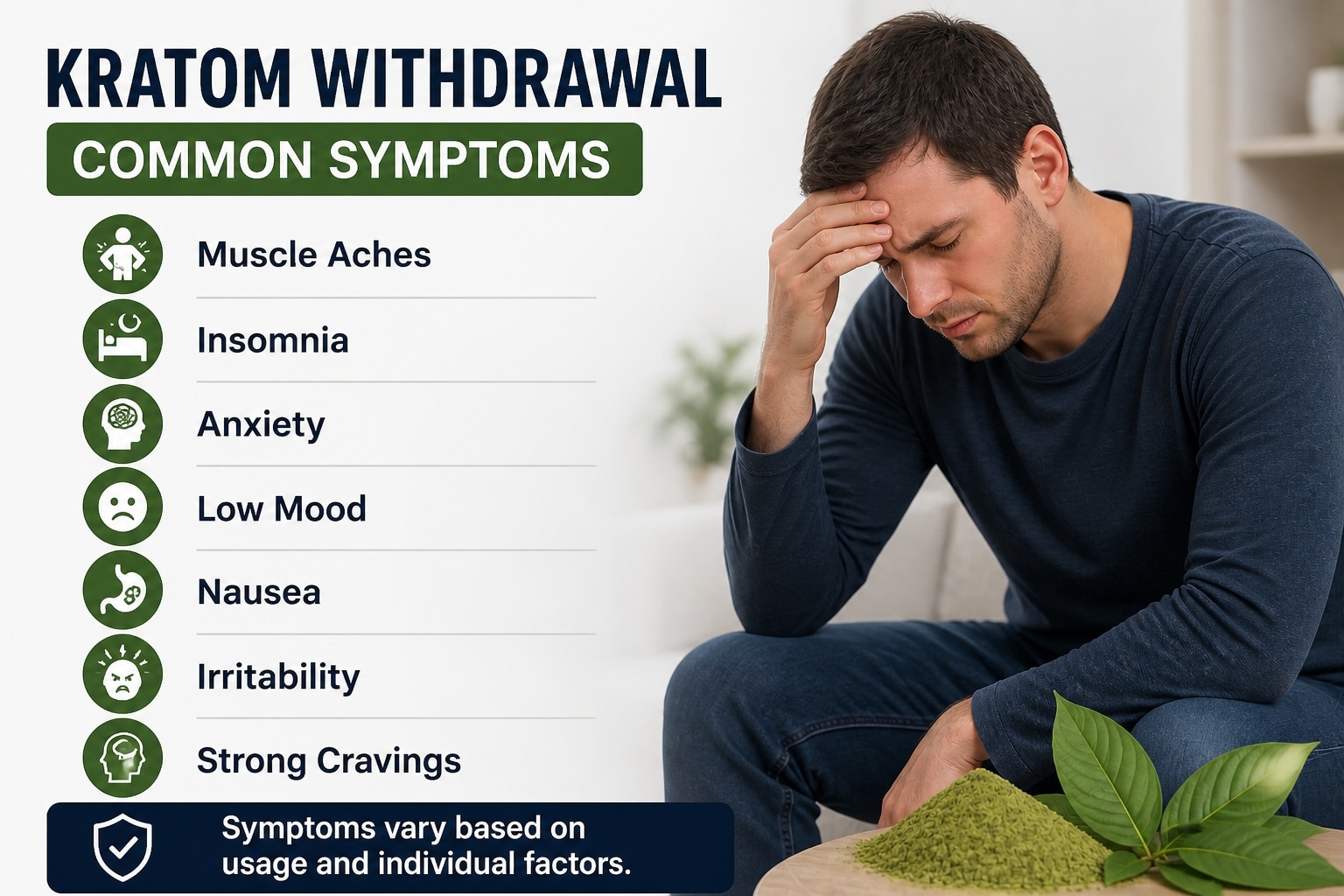
Understanding the symptoms of kratom withdrawal can help individuals recognise what they are experiencing.
- Muscle aches and body discomfort
- Insomnia or disturbed sleep
- Anxiety or restlessness
- Depression or low mood
- Nausea or digestive issues
- Irritability and mood swings
- Strong cravings
These symptoms can vary in intensity depending on how long and how often kratom was used.
How Addictive Is Kratom?
Many people underestimate how addictive kratom is because it is marketed as a natural product. However, regular use can lead to tolerance, meaning higher amounts are needed to feel the same effects.
Over time, this can create a cycle where the body depends on kratom to function normally. When use stops, withdrawal symptoms begin, making it harder to quit without support.
Why Quitting Kratom Alone Is Difficult
Stopping kratom without support can be challenging for several reasons:
- Withdrawal symptoms can feel intense
- Cravings can be difficult to manage
- Emotional changes may affect daily life
- Lack of guidance can increase relapse risk
This is why many people struggle to quit on their first attempt.
Struggling With Kratom Withdrawal Symptoms?
Understand your kratom withdrawal timeline, symptoms, and treatment options. Get expert support to manage discomfort and move toward recovery.
When Withdrawal Becomes a Concern
Withdrawal may require more attention if symptoms do not improve or begin to interfere with daily life.
- Symptoms lasting longer than expected
- Increasing anxiety or depression
- Difficulty maintaining normal routines
In these situations, additional support can be helpful.
Signs It’s Time for Treatment
Recognising when to seek help is an important step in recovery.
- Repeated attempts to quit without success
- Strong cravings that are hard to control
- Withdrawal symptoms affecting daily activities
- Emotional distress that feels difficult to manage
Programs offering substance abuse treatment centres in New Jersey provide structured care that can support both physical and emotional recovery.
How Treatment Can Help
Access to kratom withdrawal treatment can make the process safer and more manageable.
- Medical supervision during withdrawal
- Support for managing symptoms
- Guidance for long-term recovery
- Emotional and mental health support
This type of care can help individuals move through withdrawal with more stability.
Conclusion
Kratom withdrawal can vary in length and intensity, but understanding what to expect can make the process less uncertain. While many people experience symptoms for a short period, others may need more time to recover fully.
If you or someone you know is going through this experience, seeking support can make a difference. Absolute Awakenings offers guidance for individuals looking to manage withdrawal safely and move toward long-term recovery. Ready to take a step toward a healthier and more stable future with Absolute Awakenings? Taking action today can help you move forward with greater confidence.
FAQs
1. How long does kratom withdrawal last?
It can last from a few days to a few weeks, depending on usage and individual factors.
2. What are the most common symptoms?
Common symptoms include anxiety, insomnia, muscle aches, nausea, and cravings.
3. Is kratom withdrawal dangerous?
It is usually not life-threatening but can be uncomfortable and difficult to manage.
4. Can I quit kratom on my own?
Some people try, but many find it challenging without support due to cravings and symptoms.
5. When should I seek treatment?
If symptoms are severe, last longer than expected, or interfere with daily life, it may be time to seek help.