
Medically Reviewed by: Akhtar Hossain, M.D., M.S., an Addiction Treatment Professional and Pain Management Specialist. | New Jersey Fentanyl Treatment Guide
If you think someone may be experiencing a fentanyl overdose, call 911 immediately. Administer naloxone (Narcan®) if it is available and follow emergency dispatcher instructions. Acting quickly can save a life.
Quick Answer
Yes, someone can survive a fentanyl overdose—but only if they receive immediate medical attention. Fentanyl can slow or stop breathing within minutes, making it one of the deadliest opioids involved in today’s overdose crisis.
Recognizing the warning signs early, calling emergency services, and administering naloxone can dramatically improve the chances of survival.
Even after someone survives an overdose, professional addiction treatment is essential because the risk of another overdose remains extremely high.
Why This Question Matters
Every day, families search questions like:
- Can someone survive a fentanyl overdose?
- What does a fentanyl overdose look like?
- How long do you have to save someone?
- Can Narcan save someone from fentanyl?
- What should I do while waiting for 911?
These aren’t casual questions.
Most people asking them are experiencing an emergency or trying to help someone they love.
Across New Jersey, fentanyl continues to contribute to thousands of emergency responses every year. Knowing what to do during those first few minutes may save someone’s life.
What Happens During a Fentanyl Overdose?
Fentanyl affects the brain’s opioid receptors.
As the amount of fentanyl increases, breathing becomes slower and slower until it may stop completely.
Without oxygen, the brain and other organs begin shutting down.
This is why fentanyl overdoses can become fatal so quickly.
Unlike many other substances, a person may appear to simply be sleeping when they are actually experiencing a life-threatening overdose.
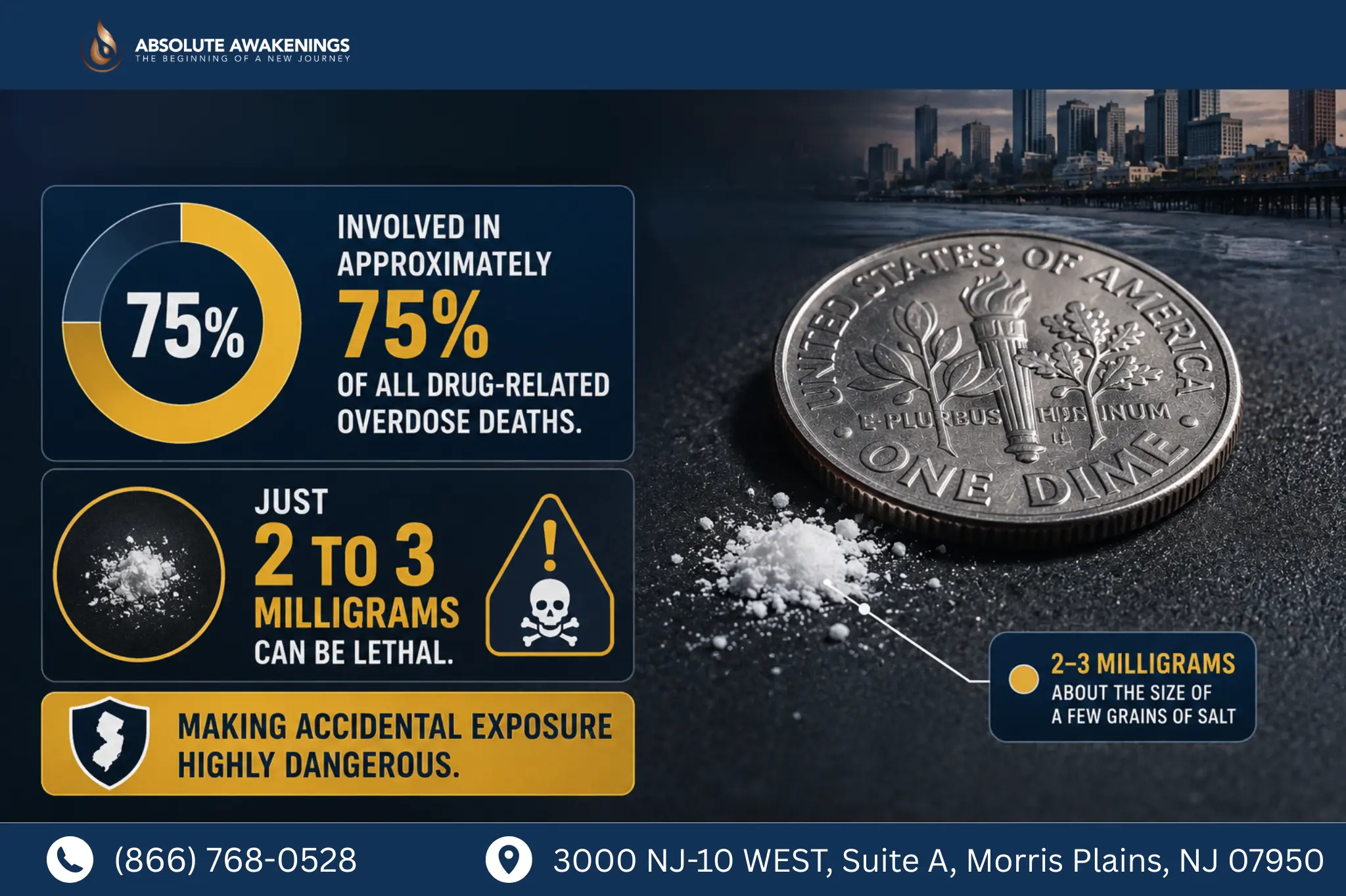
Early Warning Signs of a Fentanyl Overdose
The earlier an overdose is recognized, the better the outcome.
Common Early Symptoms
- Extreme drowsiness
- Difficulty staying awake
- Slurred speech
- Pinpoint pupils
- Confusion
- Slow breathing
- Pale or clammy skin
What Family Members Often Notice
- Person won’t wake up
- Breathing becomes unusually slow
- Loud snoring or choking sounds
- Lips begin changing color
- Unable to respond when spoken to
Never assume someone will “sleep it off.”
Emergency Signs That Require Immediate Action
If you notice any of the following, call 911 immediately.
| Emergency Sign | Why It’s Dangerous |
|---|---|
| Blue lips or fingertips | Body isn’t receiving enough oxygen |
| Very slow or stopped breathing | Life-threatening respiratory depression |
| Cannot wake the person | Possible overdose |
| Pinpoint pupils | Strong opioid effect |
| Gurgling or choking sounds | Airway may be blocked |
| Limp body | Loss of muscle control |
Every minute matters.
What Should You Do During a Fentanyl Overdose?
If you suspect an overdose:
Step 1: Call 911 Immediately
Do not wait to see if the person improves.
Emergency medical care is essential.
Step 2: Administer Naloxone (Narcan®)
Naloxone temporarily blocks opioids from attaching to receptors.
It can restore breathing long enough for emergency responders to arrive.
Remember:
- More than one dose may be needed.
- Effects may wear off before fentanyl leaves the body.
- Medical evaluation is always necessary afterward.
Step 3: Keep the Person Breathing
If trained, provide rescue breathing or CPR according to dispatcher instructions.
Step 4: Place Them in the Recovery Position
If the person begins breathing again but remains unconscious:
- Roll them onto their side.
- Keep the airway clear.
- Continue monitoring until EMS arrives.
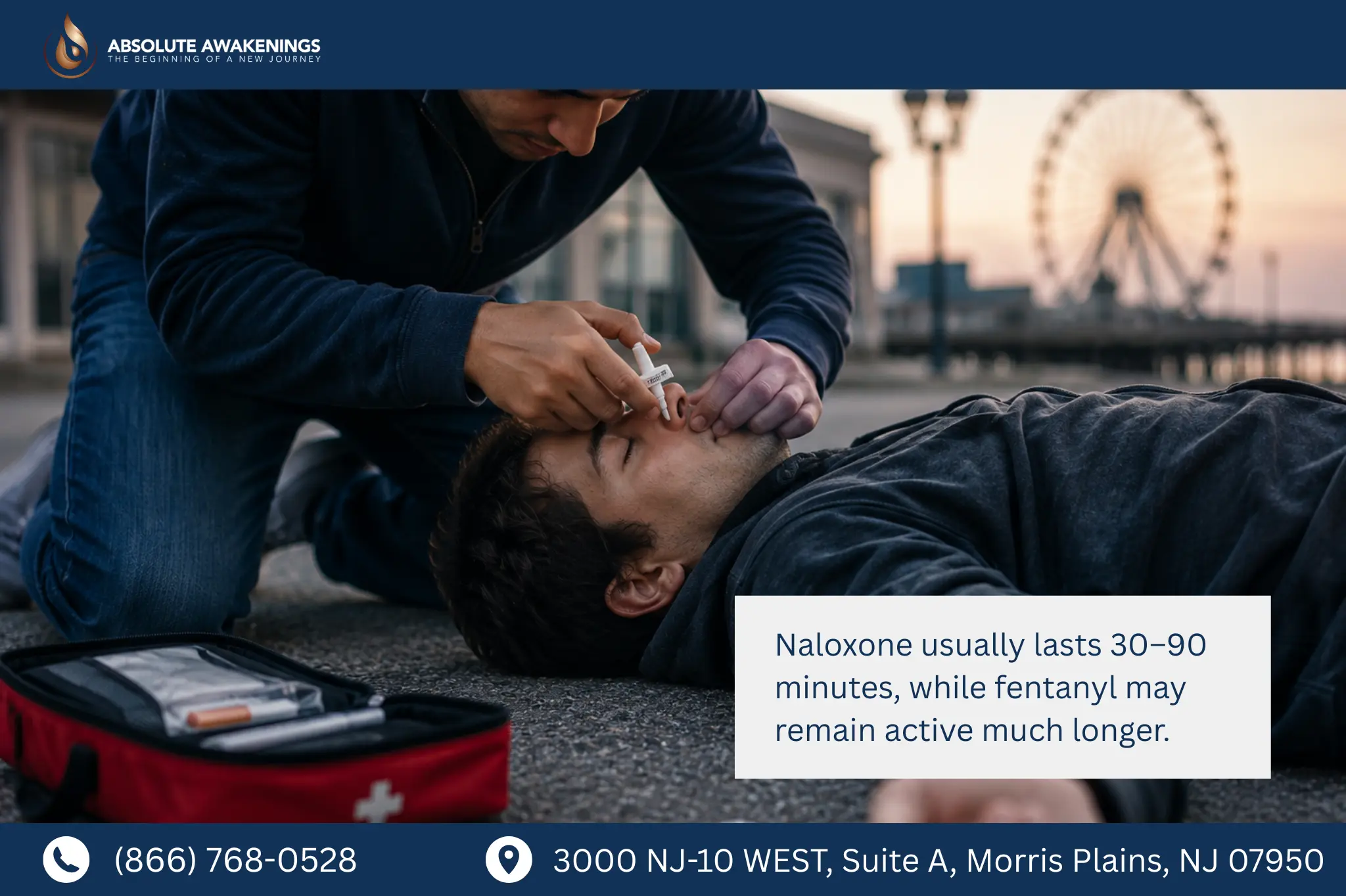
Can Someone Wake Up After Narcan?
Yes.
However, this does not mean they are out of danger.
Naloxone usually lasts 30–90 minutes, while fentanyl may remain active much longer.
Someone who appears awake can stop breathing again after naloxone wears off.
This is why going to the hospital is critical.
Who Is Most at Risk?
Anyone using fentanyl—whether knowingly or unknowingly—can overdose.
Higher-risk groups include:
- People using fentanyl daily
- Individuals returning to use after detox
- People using counterfeit pills
- People mixing opioids with alcohol or benzodiazepines
- Individuals using cocaine contaminated with fentanyl
True incident on Morris County
A 28-year-old man in Morris County had recently completed detox but returned to fentanyl after several days without using.
Believing his previous dose was still safe, he used the same amount as before.
Within minutes, he became unresponsive.
A family member recognized the signs, called 911, administered naloxone, and emergency responders transported him to the hospital.
That overdose became the turning point that led him into long-term addiction treatment.
Unfortunately, many people never receive help in time.
Why Overdoses Happen After Detox
One of the most dangerous periods for someone recovering from fentanyl addiction is immediately after stopping use.
During detox:
- Tolerance decreases rapidly.
- Previous doses become much more dangerous.
- Relapse can result in accidental overdose.
This is why treatment professionals strongly recommend continuing care after detox.
Learn more about our medically supervised Fentanyl Addiction Treatment Program
Can Someone Fully Recover After an Overdose?
Yes.
Many individuals who survive an overdose go on to achieve lasting recovery.
However, surviving the overdose is only the first step.
Without addressing the addiction itself, the likelihood of another overdose remains high.
The best outcomes typically occur when emergency medical care is followed by professional addiction treatment.
What Happens After Someone Survives a Fentanyl Overdose?
Surviving a fentanyl overdose is often a life-changing moment, but it does not mean the addiction has been treated.
Many people who survive an overdose continue experiencing:
- Strong cravings
- Withdrawal symptoms
- Anxiety and depression
- Fear of overdosing again
- Shame or guilt
- Physical exhaustion
Without professional treatment, many individuals return to fentanyl within days or weeks, placing them at an even greater risk of another overdose.
Research consistently shows that a previous non-fatal overdose is one of the strongest predictors of a future overdose.
This is why addiction specialists recommend entering treatment as soon as someone is medically stable.
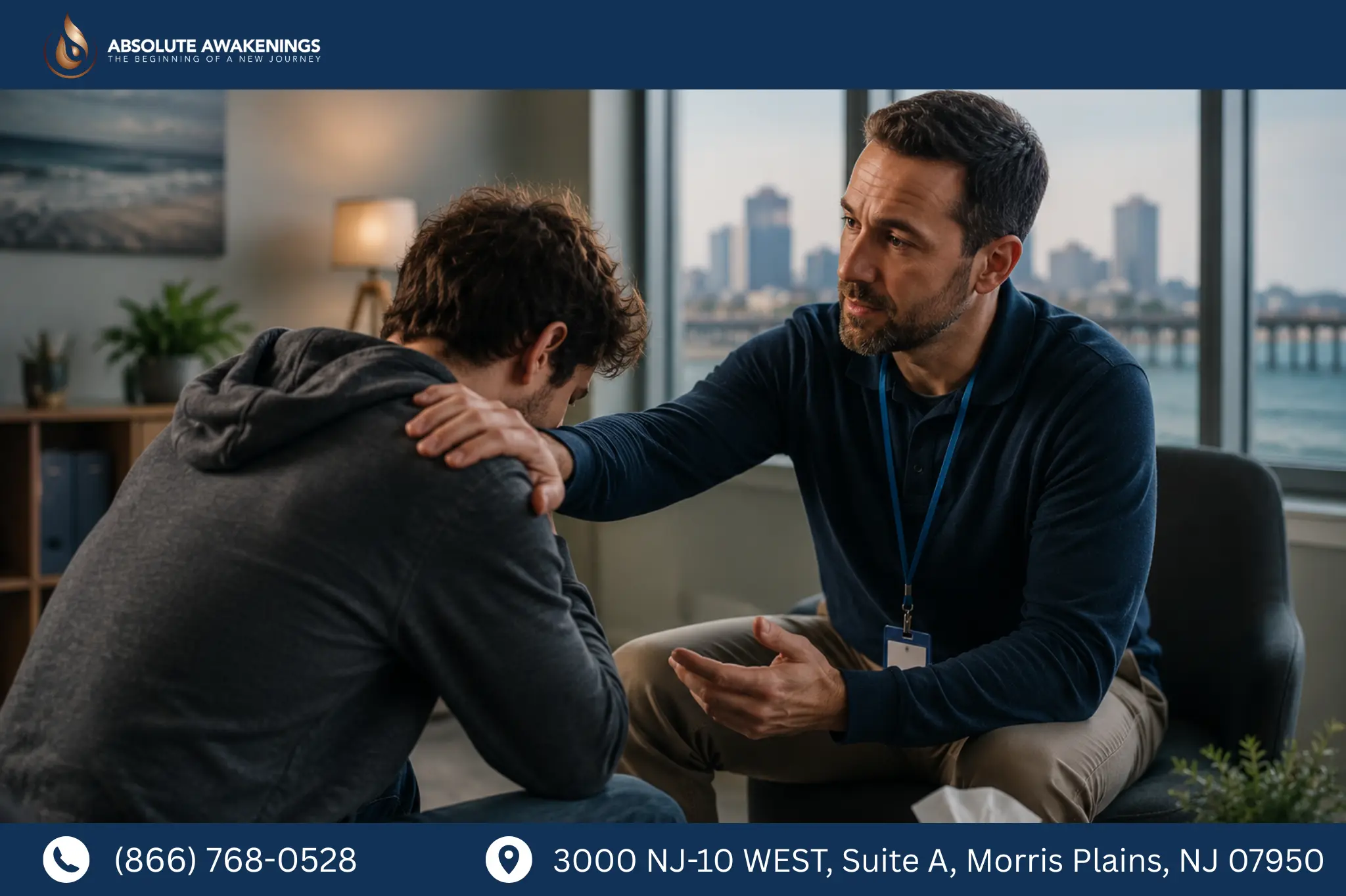
Why Professional Treatment Matters After an Overdose
Emergency responders save lives.
Treatment helps people rebuild them.
While emergency medical care focuses on stabilizing the immediate crisis, addiction treatment addresses the physical, emotional, and behavioral causes of substance use.
A comprehensive recovery plan may include:
- Medical detox
- Individual counseling
- Group therapy
- Family therapy
- Mental health treatment
- Relapse prevention planning
- Continuing care
Learn more about our specialized Fentanyl Addiction Treatment Program
Detox Is the First Step—Not the Last
Many families believe detox alone will solve the problem.
Unfortunately, addiction is much more complex.
| Detox | Comprehensive Treatment |
|---|---|
| Removes fentanyl from the body | Treats the addiction itself |
| Helps manage withdrawal | Addresses emotional and psychological causes |
| Usually lasts several days | May continue for weeks or months |
| Stabilizes physical health | Builds long-term recovery skills |
Following detox, many individuals benefit from structured addiction treatment programs that provide ongoing clinical support and relapse prevention.
Explore the levels of care available
Understanding the Recovery Journey
Recovery is different for everyone, but it often follows a similar path.
| Recovery Stage | Purpose |
|---|---|
| Emergency Care | Restore breathing and stabilize the overdose |
| Medical Detox | Safely manage withdrawal symptoms |
| Structured Treatment | Address addiction and mental health |
| Family Involvement | Rebuild trust and strengthen support |
| Continuing Care | Maintain long-term recovery |
Every stage plays an important role in reducing the risk of future overdose.
What Families Can Do After an Overdose
Watching someone survive an overdose is overwhelming.
Family members often ask:
- “What should we do now?”
- “How do we stop this from happening again?”
- “Should they go straight to rehab?”
Although every situation is unique, families can help by:
- Encouraging professional treatment immediately
- Avoiding blame or confrontation during the crisis
- Learning about opioid addiction
- Participating in family counseling if available
- Helping create a safe recovery environment
Recovery is most successful when loved ones are involved in a healthy and supportive way.
Learn More About Fentanyl Addiction and Recovery
If you’re researching fentanyl overdose, these additional resources can help you better understand addiction and recovery.
Signs of Fentanyl Addiction
Learn how to recognize physical, emotional, and behavioral warning signs before an overdose occurs.
What Does Fentanyl Detox Feel Like?
Understand the withdrawal process, common symptoms, and why medical supervision is often recommended.
Fentanyl Withdrawal Timeline
See what typically happens during each stage of withdrawal, from the first 24 hours through long-term recovery.
How Long Does Fentanyl Stay in Your System?
Learn how long fentanyl can remain detectable in urine, blood, saliva, and hair tests.
Frequently Asked Questions (FAQs)
Q Can someone survive a fentanyl overdose?
Yes. Prompt recognition of the overdose, immediate emergency medical care, and timely administration of naloxone can significantly improve the chances of survival.
Q How long does someone have before a fentanyl overdose becomes fatal?
There is no exact timeline. Because fentanyl can stop breathing within minutes, every suspected overdose should be treated as a medical emergency.
Q Does Narcan always work?
Naloxone (Narcan®) can reverse the effects of opioids, but multiple doses may be required for fentanyl overdoses. Even if the person wakes up, they still need emergency medical care because the medication may wear off before the fentanyl leaves their system.
Q Can someone overdose again after surviving?
Yes.
The risk of another overdose remains high if the underlying addiction is not treated. In addition, tolerance decreases after periods without opioid use, making future use even more dangerous.
Q What should someone do after surviving an overdose?
After receiving emergency medical care, it’s important to seek professional addiction treatment to address both physical dependence and the underlying causes of substance use.
Why Absolute Awakenings?
At Absolute Awakenings, we understand that surviving an overdose is only the beginning of recovery.
Our evidence-based treatment programs are designed to help individuals safely move from crisis to stability through compassionate, individualized care.
Whether someone needs detox, structured treatment, therapy, or continuing support, our team works with each client to develop a recovery plan that meets their unique needs.
Serving Individuals and Families Across New Jersey
Absolute Awakenings proudly serves individuals throughout:
- Morris Plains
- Morristown
- Parsippany
- Denville
- Randolph
- Livingston
- Essex County
- Bergen County
- Morris County
- Communities across New Jersey
Our goal is to provide accessible, evidence-based addiction treatment close to home.
Take the First Step Before Another Crisis Happens
If you or someone you love has survived a fentanyl overdose—or you’re worried one could happen—don’t wait for another emergency.
Early treatment can help reduce the risk of relapse, overdose, and long-term health complications.
Our admissions team is available to answer questions, explain treatment options, and help you begin the recovery process.
Learn more about admissions and verify your insurance.
Contact Absolute Awakenings
Address
3000 NJ-10, Suite A
Morris Plains, NJ 07950
Phone
(866) 768-0528
A single phone call can be the first step toward saving a life.