
You had a few drinks last weekend. Nothing extreme, maybe four or five over the course of an evening. Three days later, you have a sore throat, a low-grade fever, and the kind of fatigue that makes getting off the couch feel like a project.
Coincidence? Probably not.
The research on alcohol and immune system function is more damning than most people realize. It is not just heavy, long-term drinkers who are affected. A single night of drinking is enough to measurably suppress your immune defenses, and the effect lasts longer than the hangover does.
This article explains exactly what happens, why it happens, and what it means if drinking has become frequent enough that your body rarely gets a break.
If alcohol has started affecting more than your immune system, Absolute Awakenings offers confidential alcohol treatment in New Jersey. Call (866) 768-0528 to speak with someone today.
Key Takeaways
- Alcohol does weaken the immune system, this is documented, not debated
- Even a single episode of heavy drinking suppresses immune function for up to 24 hours
- Chronic drinking causes long-term immune dysregulation that increases risk of serious infection and disease
- Drinking alcohol while sick actively slows recovery and can worsen symptoms
- Alcohol immune suppression affects both the innate and adaptive immune response
- Absolute Awakenings provides alcohol detox and treatment programs in Morris Plains, New Jersey
Most people understand that smoking damages the lungs or that a poor diet affects the heart. The connection between alcohol and the immune system is just as direct, and just as well-established, but far fewer people talk about it.
Part of the reason is that immune suppression is invisible. You do not feel your white blood cell count drop after a few drinks. You just notice, a few days later, that you got sick again. Or that the same cold that lasts five days for your partner hangs around for two weeks in you.
That pattern has a cause. And understanding it matters, especially if drinking is a regular part of your life.
Does Alcohol Weaken Your Immune System?
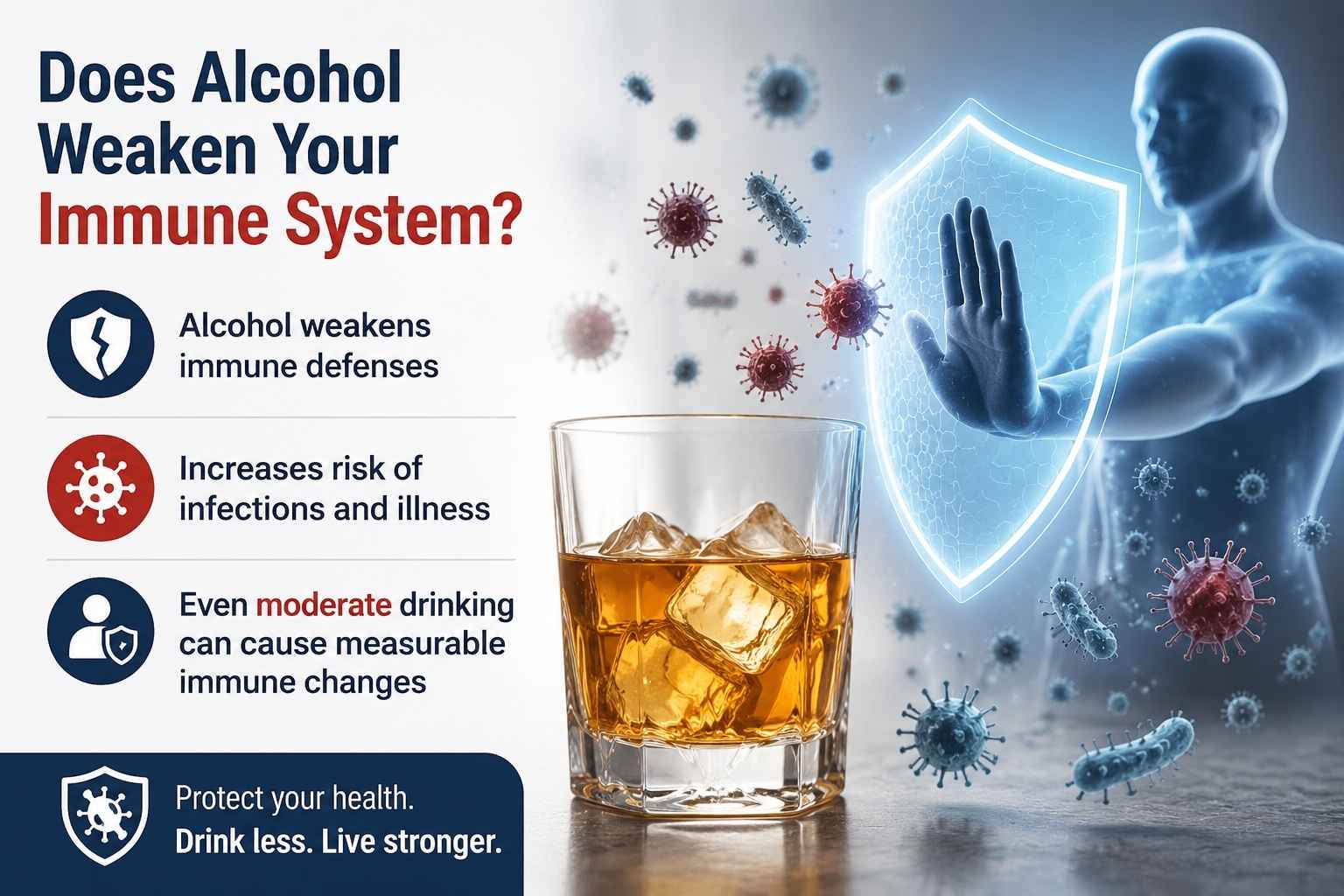
Yes. Definitively. This is not a fringe claim or anecdotal observation, it is one of the most consistently replicated findings in addiction medicine and immunology research.
Alcohol disrupts the production and function of the immune cells your body relies on to identify and destroy pathogens. It impairs communication between immune cells. It weakens the physical barriers, like the gut lining and respiratory mucosa, that stop pathogens from entering the bloodstream in the first place.
The effect is dose-dependent, meaning more alcohol causes more suppression. But research confirms that even moderate drinking, defined as more than one to two drinks in a sitting, produces measurable immune changes. You do not need to be a heavy or daily drinker for this to apply to you.
How Does Alcohol Affect the Immune System?
Alcohol weakens both parts of your immune system: the innate immune system, which provides immediate protection, and the adaptive immune system, which helps your body fight specific infections and build long-term immunity.
It damages the gut lining, making it easier for bacteria and toxins to leak into the bloodstream. This triggers ongoing inflammation and forces your immune system to work overtime, leaving it less effective at fighting real infections.
Alcohol also reduces the number and function of key immune cells, including T-cells, B-cells, natural killer cells, and macrophages. As a result, your body produces fewer antibodies, responds less effectively to vaccines, and takes longer to recover from illness.
| Immune Component | How Alcohol Affects It |
|---|---|
| Gut barrier | Increases permeability, allowing bacteria into the bloodstream |
| Natural killer cells | Reduces their ability to destroy infected cells |
| Macrophages | Weakens their response to harmful microbes |
| T-cells | Lowers their number and function |
| B-cells | Reduces antibody production |
| Cytokines | Disrupts immune signaling, leading to chronic inflammation |
What One Night of Heavy Drinking Actually Does
This is where most people are surprised. The assumption is that immune suppression from alcohol is a long-term problem, something that develops over years of heavy drinking. That is wrong.
A single episode of heavy drinking, defined in research as consuming enough alcohol to reach a blood alcohol concentration of 0.08% or higher, triggers immune suppression within hours. Studies measuring blood samples from people after acute intoxication show reduced natural killer cell activity, impaired macrophage function, and decreased production of pro-inflammatory cytokines needed to mount an immune defense.
This suppression persists for up to 24 hours after drinking stops. During that window, your body is less equipped to fight off whatever it encounters, viruses, bacteria, or any infection it was already managing quietly.
That weekend gathering where everyone got sick two days later? The alcohol did not give anyone a cold. But it made everyone’s immune system less capable of stopping the virus that was already circulating in the room.
How Long Does Alcohol Suppress the Immune System?
The duration of suppression depends on how much was consumed and how regularly someone drinks:
- A single heavy drinking episode: Immune function is measurably suppressed for up to 24 hours after alcohol clears the system
- Several consecutive days of heavy drinking: Suppression compounds, the immune system does not fully recover between episodes
- Chronic heavy drinking: Produces persistent immune dysregulation that does not resolve simply by skipping a few days. Months of abstinence may be required before immune function normalizes
For chronic drinkers, the immune system is not suppressed intermittently, it is chronically compromised. The body shifts into a state of persistent low-grade inflammation while simultaneously losing the capacity to mount an effective response to actual threats. That combination is exactly as problematic as it sounds.
The health benefits of abstinence and sobriety include measurable immune recovery, white blood cell counts normalize, gut barrier integrity improves, and the chronic inflammatory cycle that heavy drinking creates begins to resolve. But recovery takes time, and it requires consistent abstinence, not just a week off.
Concerned About Your Drinking? Speak With Our Team Today
If alcohol is affecting your health, immunity, or daily life, our confidential team is here to help. Verify insurance and explore treatment options today.
Drinking Alcohol While Sick: Why It Makes Things Worse
People reach for a hot toddy when they feel a cold coming on. The logic, that alcohol “kills germs” or helps you sweat out a fever, has no clinical basis.
Drinking alcohol while sick does not shorten illness. It extends it. Here is what actually happens:
Alcohol dehydrates the body. Mucous membranes in the respiratory tract need adequate moisture to trap and expel pathogens. Dehydration dries them out, reducing their effectiveness and making it easier for viruses to take hold.
Alcohol disrupts sleep architecture. Quality sleep is when the immune system does its heaviest repair and response work. Alcohol fragments REM sleep, cutting into the recovery process your body needs most when fighting infection.
Alcohol impairs fever response. Fever is a deliberate immune mechanism, the body raising its core temperature to create a less hospitable environment for pathogens. Alcohol interferes with thermoregulation and can blunt this response.
Alcohol interacts with medications. Many over-the-counter cold and flu medications, including acetaminophen, antihistamines, and decongestants, carry serious interaction risks when combined with alcohol.
The short answer to whether you should drink alcohol while sick: no. Not even a little. Every drink taken during illness is borrowing from the immune resources your body needs to recover.
Does Alcohol Affect the Immune System’s Ability to Fight Infection?
Yes, and this effect is particularly well-documented for several specific conditions.
Pneumonia: Alcohol-use disorder is one of the strongest known risk factors for pneumococcal pneumonia. Heavy drinkers are four to seven times more likely to develop pneumonia than non-drinkers, and they experience higher rates of complications and mortality when they do.
Tuberculosis: Roughly 10% of global TB cases are attributable to alcohol use. Alcohol impairs the macrophage function that is central to containing TB infection.
Sepsis: Heavy drinkers who develop infections are significantly more likely to develop sepsis, a life-threatening systemic immune response, than non-drinkers with the same infection.
HIV and other viral infections: Alcohol accelerates disease progression in people living with HIV by further suppressing the CD4+ T-cell counts that are already compromised by the virus.
Surgical recovery: Patients who drink heavily before surgery have higher rates of post-operative infection, slower wound healing, and longer hospital stays, all direct consequences of compromised immune function.
Chronic Drinking and Long-Term Immune Damage
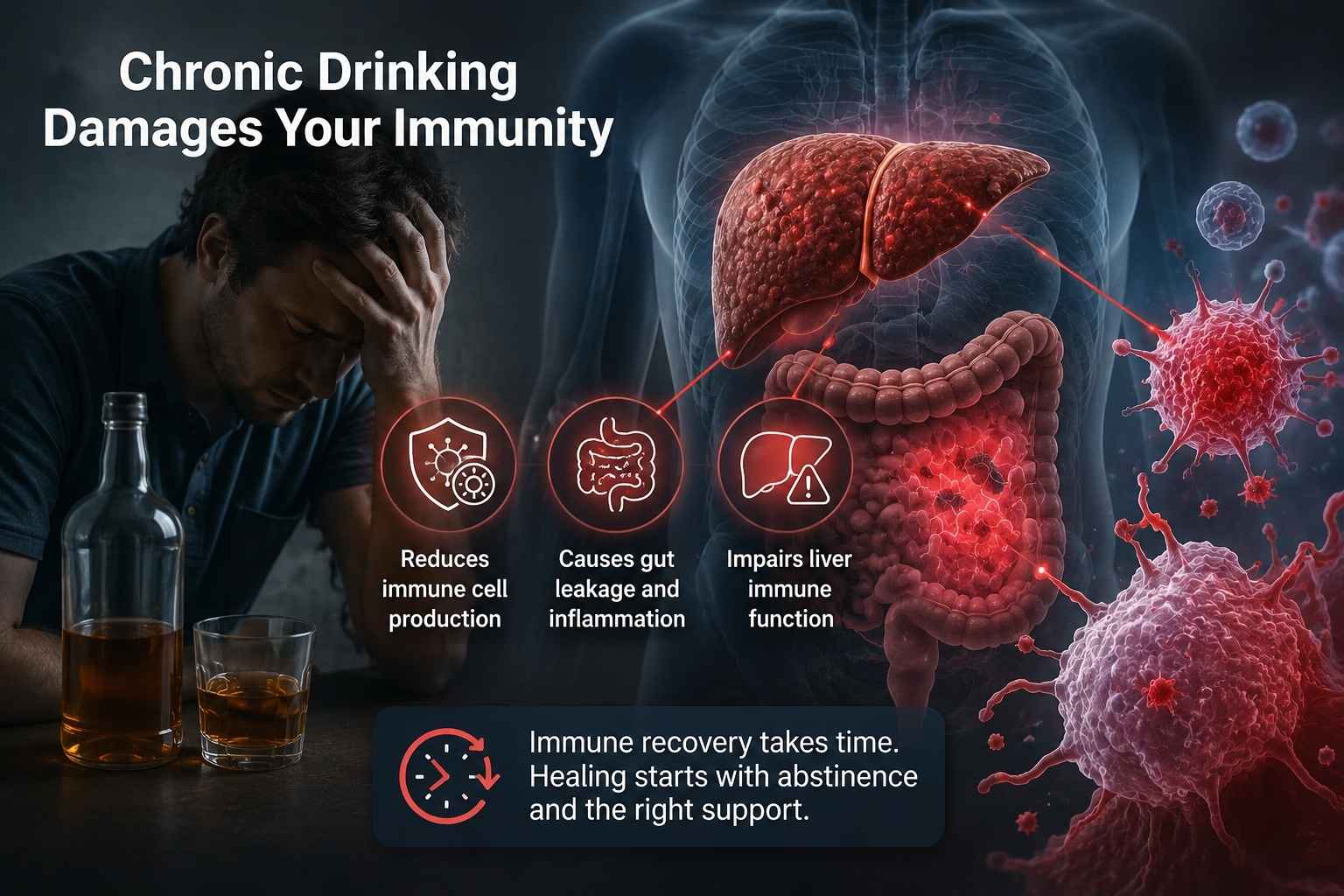
For someone drinking heavily on a regular basis, immune suppression is not an occasional side effect. It becomes the baseline state.
Chronic alcohol exposure does three things simultaneously: it reduces the production of protective immune cells, it creates persistent systemic inflammation through bacterial translocation from the gut, and it impairs the liver’s ability to produce immune proteins. The liver is central to immune function, it filters blood, produces acute-phase proteins, and houses a large population of immune cells called Kupffer cells. Alcohol damages all of that.
The result is a body that is chronically inflamed but chronically under-defended. More susceptible to infection. Slower to recover. More likely to develop immune-related diseases including certain cancers, autoimmune conditions, and chronic respiratory illness.
This does not reverse in a week. Meaningful immune recovery after chronic heavy drinking takes months of sustained abstinence, supported by good nutrition, adequate sleep, and in many cases, structured clinical support.
When Immune Suppression Is the Least of Your Concerns
Frequent illness and slow recovery are real consequences of regular drinking. But for many people, by the time those signs are visible, alcohol has already affected far more, relationships, work, mental health, and the ability to function without it.
Signs that alcohol has moved beyond a lifestyle choice and into dependency:
- You drink more than you intend to, consistently
- You have tried to cut back and found it harder than expected
- You experience anxiety, irritability, or physical discomfort when you go without alcohol
- Drinking is affecting your work, relationships, or health, and you continue anyway
- You use alcohol to manage stress, sleep, or emotions
These are not moral failures. They are clinical signs of alcohol use disorder, a medical condition with effective, evidence-based treatments. Recognizing them is the beginning, not the end.
Getting Alcohol Treatment in New Jersey at Absolute Awakenings
Absolute Awakenings is located at 3000 NJ-10 in Morris Plains, New Jersey, and serves adults across Morris County and the surrounding region, including clients from Parsippany, Morristown, Bergen County, Essex County, Hudson County, and beyond.
The program treats alcohol addiction across multiple levels of care: detox placement, partial hospitalization, intensive outpatient, and standard outpatient, structured to meet people where they are, not where it would be convenient for a program to start them.
As an alcohol detox treatment center in New Jersey, Absolute Awakenings coordinates medically supervised detox for clients who need it before stepping into therapeutic programming. Alcohol withdrawal can be medically serious, it is not something to manage alone or at home.
Therapy at Absolute Awakenings includes CBT, ACT, family therapy, trauma-informed care, yoga therapy, and their proprietary Recovery Capital program, a model built around rebuilding the practical foundations of a life in recovery, not just managing the addiction in isolation.
Most major insurance plans are accepted, including Cigna, Aetna, BCBS, Anthem, Magellan, Beacon, and TRICARE. Verify your insurance coverage here before your first call, it takes a few minutes and removes one of the main barriers that keeps people from reaching out.
The first call is not a commitment. It is a conversation. Call (866) 768-0528 or contact Absolute Awakenings online to speak with an admissions specialist today.
This article has been reviewed for clinical accuracy. It is intended for informational and educational purposes only and does not constitute a medical diagnosis or treatment recommendation. If you are experiencing severe alcohol withdrawal symptoms, seek emergency medical care immediately.
Frequently Asked Questions
Does alcohol weaken the immune system?
Yes. Alcohol suppresses both the innate and adaptive immune response. It impairs the function of natural killer cells, macrophages, T-cells, and B-cells, and damages the gut barrier that prevents pathogens from entering the bloodstream. These effects occur even after a single episode of heavy drinking.
How does alcohol affect the immune system specifically?
Alcohol disrupts immune function through several mechanisms: it increases gut permeability, allowing bacteria to enter the bloodstream and trigger systemic inflammation; it reduces white blood cell production and activity; it impairs cytokine signaling between immune cells; and it damages the liver, which plays a central role in immune defense.
How long does alcohol suppress the immune system?
A single episode of heavy drinking suppresses immune function for up to 24 hours after the alcohol clears the body. Consecutive nights of heavy drinking extend and compound that suppression. Chronic heavy drinking produces persistent immune dysregulation that may take months of abstinence to fully reverse.
Should I avoid drinking alcohol while sick?
Yes. Drinking alcohol while sick dehydrates the body, disrupts the sleep your immune system depends on for recovery, interferes with fever response, and interacts dangerously with many common cold and flu medications. There is no clinical basis for the idea that alcohol helps fight illness, the evidence consistently points the other way.
Does alcohol affect the immune system’s ability to fight infection?
Yes. Heavy drinkers are significantly more susceptible to pneumonia, tuberculosis, sepsis, and post-surgical infections. Alcohol impairs the immune mechanisms, particularly macrophage function and antibody production, that are central to fighting bacterial and viral infections.
Can the immune system recover after quitting alcohol?
Yes. Immune function improves with sustained abstinence. White blood cell counts normalize, gut barrier integrity begins to recover, and the chronic inflammation cycle associated with heavy drinking starts to resolve. The timeline depends on how long and how heavily someone was drinking, but measurable improvement is well-documented in people who stop.
Is drinking alcohol while sick ever acceptable?
No amount of alcohol benefits an active illness. Even one or two drinks impair the immune processes working to clear the infection, and alcohol interacts with many medications commonly taken when sick. The clearest advice the clinical literature offers on this: skip the drink entirely until you have recovered.
Does alcohol affect immune system function even in moderate drinkers?
Research shows that even moderate drinking, above one to two drinks per sitting, produces detectable changes in immune cell activity. The effects are less severe and persistent than those seen in heavy or chronic drinkers, but the idea that moderate alcohol use is immune-neutral is not supported by evidence.
What alcohol treatment options are available in New Jersey?
Absolute Awakenings in Morris Plains, NJ offers a full continuum of alcohol treatment, detox placement, partial hospitalization, intensive outpatient, outpatient, and dual-diagnosis programming. Services are covered by most major insurance plans. Call (866) 768-0528 or visit absoluteawakenings.com to get started.
Is there an alcohol detox center near me in Morris County, NJ?
Yes. Absolute Awakenings is located at 3000 NJ-10 in Morris Plains, New Jersey, and provides alcohol detox placement and treatment programming for adults across Morris County, Bergen County, Essex County, Hudson County, and the broader northern New Jersey area.