
Objective
Educate individuals and families about the physical and neurological consequences of chronic heavy drinking, address the warning signs, and guide readers toward confidential assessment and treatment at Absolute Awakenings in Morris Plains, New Jersey.
Key Takeaway
- The long-term effects of alcohol affect virtually every organ system, liver, brain, heart, pancreas, and immune function
- Many of the physical signs of heavy drinking over years are visible before a formal diagnosis
- Alcohol-related brain damage can appear after as few as five to ten years of heavy use
- Chronic alcoholism raises cancer risk across six different organ systems
- Withdrawal from heavy alcohol use requires medical supervision, stopping abruptly can be fatal
- Treatment works, and most major insurance plans cover alcohol addiction programs in New Jersey
Most people who develop alcohol use disorder don’t wake up one day and decide to drink themselves into liver failure. It happens gradually, social drinking becomes nightly drinking, nightly drinking becomes necessary drinking, and the body absorbs each stage of damage silently. By the time symptoms are obvious, the long-term effects of alcohol have already been compounding for years.
The human body is remarkably adaptive. That’s actually part of what makes chronic alcoholism so dangerous. The liver keeps processing, the brain keeps compensating, and the person drinking keeps functioning, sometimes at a high level, while the internal damage accumulates. Physical signs of heavy drinking over years often don’t surface until the damage is significant.
This article covers what that damage actually looks like, organ by organ, and what recovery requires. If you or someone you love is somewhere in this picture right now, confidential support is available at Absolute Awakenings Treatment Center in Morris Plains, New Jersey. Call (866) 768-0528 to speak with someone today.
What Counts as Heavy Drinking, and Why It Matters
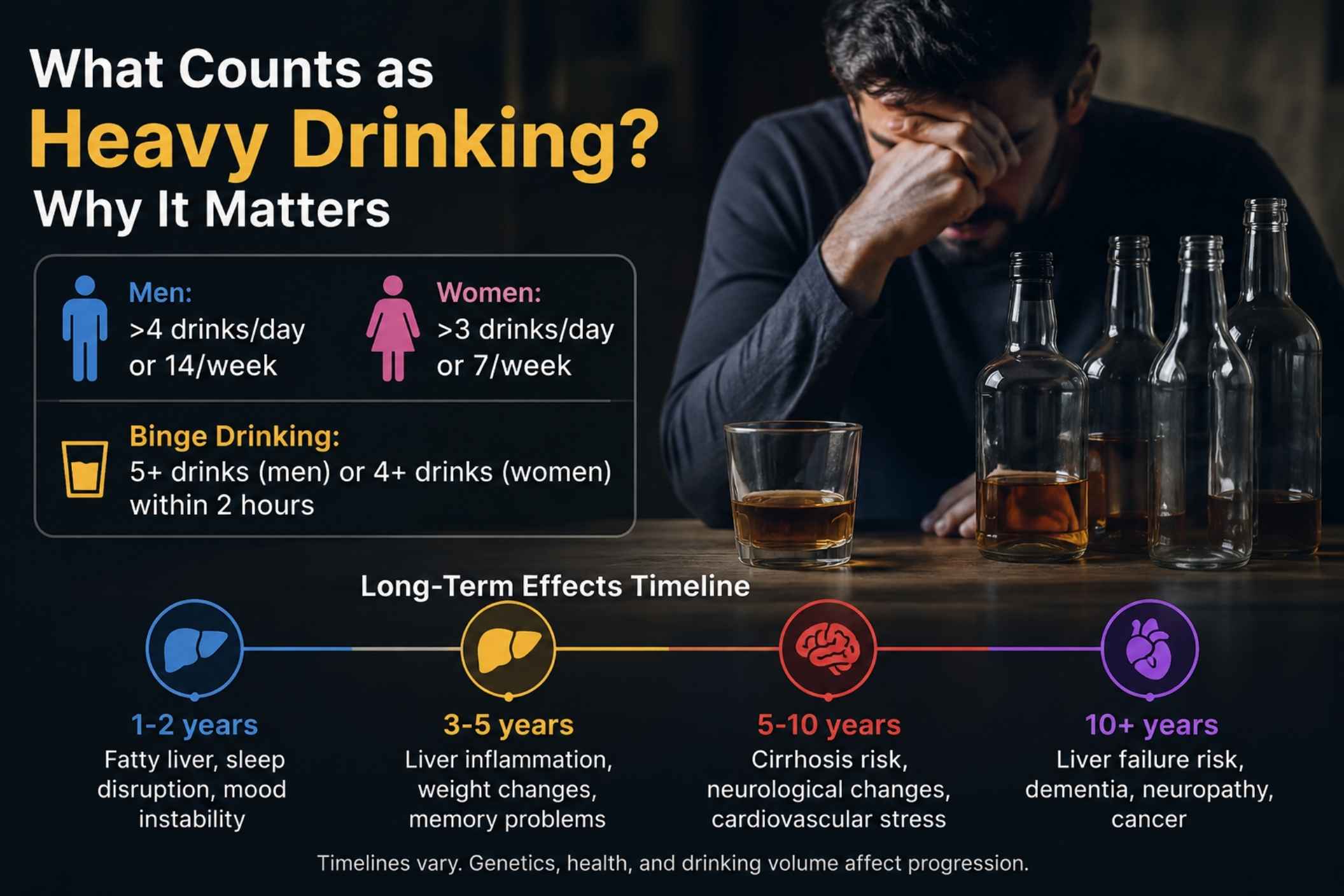
The National Institute on Alcohol Abuse and Alcoholism defines heavy drinking as more than four drinks per day or 14 per week for men, and more than three drinks per day or seven per week for women. Binge drinking is defined as reaching a blood alcohol concentration of 0.08% or above, typically five or more drinks within two hours for men, four for women.
Both patterns cause damage. But the effects of heavy drinking that persist and progress are driven by chronicity, drinking heavily, consistently, over months and years.
Understanding binge drinking and its long-term consequences is important because many people who meet clinical criteria for alcohol use disorder don’t identify as “alcoholics.” They drink most nights, not all day. They hold jobs. They function, until they don’t.
Here is a general timeline of what happens when heavy drinking becomes chronic:
| Duration | What Begins to Develop |
| 1-2 years | Fatty liver, sleep disruption, mood instability |
| 3-5 years | Early liver inflammation (alcoholic hepatitis), weight changes, memory problems |
| 5-10 years | Cirrhosis risk rises, neurological changes, cardiovascular stress |
| 10+ years | Liver failure risk, alcohol-related dementia, peripheral neuropathy, cancer |
These are ranges, not guarantees. Genetics, overall health, and drinking volume all affect progression. Some people develop cirrhosis in five years. Others develop it in twenty. The timeline varies, the damage doesn’t.
Long-Term Effects of Alcohol on the Liver
The liver processes roughly 90 percent of the alcohol a person consumes. It can handle some of that load. What it cannot handle is constant, sustained demand over years.
The long-term effects of alcohol on the liver progress through three identifiable stages:
Alcoholic Fatty Liver (Steatosis)
Fat accumulates in liver cells when alcohol is metabolised faster than the liver can process the byproducts. This stage is reversible. Stop drinking, and fatty liver typically resolves within weeks. Most people at this stage have no symptoms and no idea it’s happening.
Alcoholic Hepatitis
Continued drinking causes liver cell inflammation and death. Symptoms include jaundice (yellowing of the skin and eyes), upper right abdominal pain, nausea, and fever. Alcoholic hepatitis can be severe and life-threatening even in relatively young drinkers. Some cases progress rapidly to liver failure within months.
Cirrhosis
Scar tissue replaces healthy liver tissue. The liver stops functioning effectively. Cirrhosis is irreversible, the scarring does not heal. Complications include portal hypertension, internal bleeding from oesophageal varices, ascites (fluid buildup in the abdomen), and hepatic encephalopathy, where ammonia buildup impairs brain function.
Approximately 10 to 20 percent of heavy drinkers develop cirrhosis. Among those who continue drinking after a cirrhosis diagnosis, five-year survival rates drop significantly. Stopping alcohol use is the single most important intervention at every stage of liver disease, but it must be done safely under medical supervision.
Concerned About the Long Term Effects of Alcohol?
Talk confidentially with an addiction specialist today. Get a professional assessment, verify insurance, and explore personalized treatment options.
What Heavy Drinking Does to the Brain Over Time
Alcohol is a central nervous system depressant. Short-term, it slows brain activity. Long-term, it restructures how the brain functions at a neurological level.
The long-term effects of alcohol on the brain include:
- Wernicke-Korsakoff Syndrome: A thiamine (vitamin B1) deficiency caused by chronic heavy drinking. Wernicke’s encephalopathy presents acutely, confusion, eye movement abnormalities, loss of muscle coordination. If untreated, it progresses to Korsakoff psychosis, characterised by severe memory loss, confabulation (unconsciously fabricating memories), and inability to form new memories. This condition is often permanent.
- Alcohol-Related Dementia: Distinct from Korsakoff syndrome, this involves broad cognitive decline affecting reasoning, problem-solving, and verbal fluency. Heavy drinkers in their 40s and 50s can present with cognitive profiles resembling early Alzheimer’s disease.
- Brain Shrinkage: Neuroimaging studies consistently show reduced grey and white matter volume in long-term heavy drinkers, particularly in the prefrontal cortex, the region governing decision-making, impulse control, and emotional regulation.
- Peripheral Neuropathy: Nerve damage causes tingling, numbness, and burning pain in the hands and feet. It’s common, progressive, and partially reversible if alcohol use stops early enough.
- Sleep Architecture Disruption: Alcohol suppresses REM sleep. Long-term heavy drinkers often experience profound sleep disorders that persist well into early recovery.
What happens when you drink every day is that the brain gradually recalibrates to function with alcohol present. Removing it abruptly triggers withdrawal, and in the context of alcohol, withdrawal can include life-threatening seizures.
How Chronic Alcohol Use Damages the Heart and Cardiovascular System
Moderate alcohol use has been associated with some protective effects on the heart, a nuance that has been significantly overstated and is now contested in updated research. Heavy, chronic alcohol use has no protective effect. It has the opposite.
Effects of alcohol on the body’s cardiovascular system include:
Alcoholic Cardiomyopathy: The heart muscle weakens and enlarges from years of alcohol exposure. The result is reduced pumping efficiency, leading to heart failure symptoms, fatigue, breathlessness, swollen legs.
Arrhythmias: Irregular heart rhythms, including atrial fibrillation, are significantly more common in heavy drinkers. “Holiday heart syndrome”, arrhythmia following binge drinking, is a well-documented clinical phenomenon even in people without prior heart disease.
Hypertension: Chronic heavy drinking raises blood pressure consistently. Elevated blood pressure over years increases stroke and heart attack risk substantially.
Haemorrhagic Stroke: Heavy drinking is a recognised risk factor for bleeding strokes, independent of blood pressure effects.
Physical Signs of Heavy Drinking Over Years
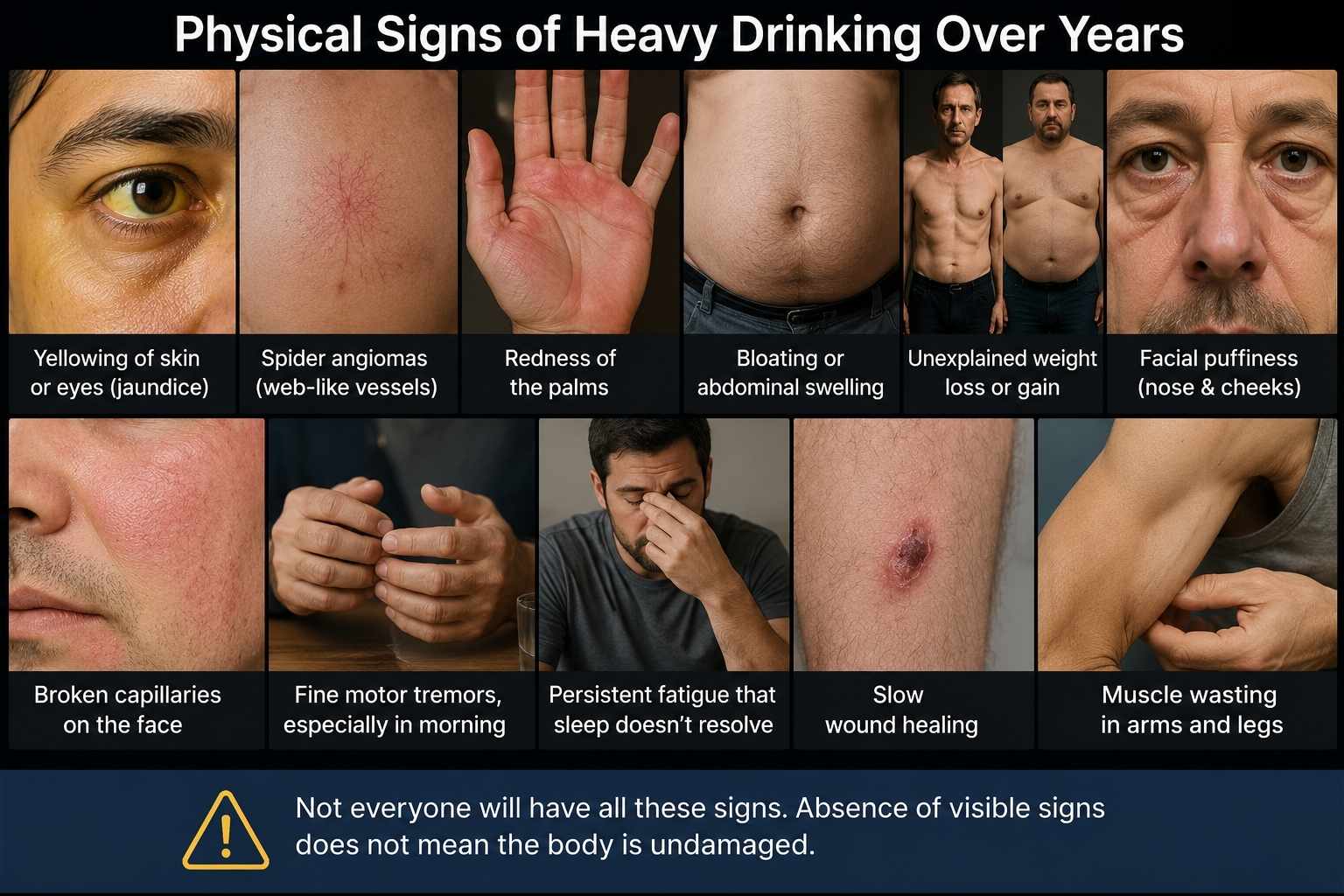
Family members often notice the physical changes before the person drinking acknowledges them. These are observable signs that chronic alcohol use has been affecting the body for some time.
Physical signs of heavy drinking over years:
- Yellowing of the skin or whites of the eyes (jaundice)
- Spider angiomas, small, web-like blood vessels visible on the skin
- Redness of the palms (palmar erythema)
- Bloating or visible abdominal swelling
- Significant unexplained weight loss or weight gain
- Persistent facial puffiness, particularly around the nose and cheeks
- Broken capillaries across the face
- Fine motor tremors, especially noticeable in the morning
- Persistent fatigue that sleep doesn’t resolve
- Slow wound healing
- Muscle wasting in the arms and legs
Not every person with alcohol use disorder will present all of these. Some people in active addiction present with no visible markers at all. The absence of visible signs does not mean the body is undamaged.
Alcohol’s Connection to Cancer and Immune Suppression
Alcohol is classified as a Group 1 carcinogen by the International Agency for Research on Cancer. That puts it in the same category as tobacco and asbestos, not because it causes cancer at the same rate, but because the evidence of causal relationship is unambiguous.
Heavy drinking is associated with increased risk of cancers of the:
- Mouth and throat
- Oesophagus
- Liver
- Colon and rectum
- Breast (in women)
- Stomach
The risk is dose-dependent and cumulative, more drinks per day over more years equals higher cancer risk. It compounds further when alcohol use is combined with tobacco.
The health risks of chronic alcoholism extend to immune function as well. Alcohol impairs the production and activity of white blood cells, makes the gut lining more permeable to bacteria, and reduces the body’s ability to fight infection. Pneumonia and tuberculosis are both significantly more common in people with chronic alcohol use disorder.
When Everyday Drinking Becomes a Medical Emergency
There is a specific set of symptoms that signals a medical emergency, not just a problem that can be managed at home.
Seek emergency care immediately if someone who drinks heavily experiences:
- Seizures after reducing or stopping alcohol
- Hallucinations (seeing or hearing things that aren’t there)
- Severe confusion or disorientation
- Vomiting blood or passing black, tarry stools (signs of internal bleeding)
- Severe abdominal pain
- High fever alongside jaundice
- Uncontrollable shaking (delirium tremens)
Alcohol withdrawal delirium, delirium tremens, carries a mortality rate of up to 15 percent when untreated. Medical detox manages withdrawal safely using medications including benzodiazepines and anticonvulsants. Attempting to detox from heavy alcohol use at home is dangerous. This is not hyperbole, it is a medical fact.
Treatment for Alcohol Addiction in New Jersey
Understanding the damage is one thing. Knowing what to do about it is another.
Treatment for alcohol addiction in New Jersey at Absolute Awakenings Treatment Center begins with placement into medically supervised detox, followed by a structured treatment program that addresses both the physical dependence and the underlying factors driving it.
Treatment levels available at Absolute Awakenings include:
| Level of Care | What It Involves |
| Detox Placement | Medically supervised withdrawal management |
| Partial Hospitalization (PHP) | Full-day structured programming, returning home at night |
| Intensive Outpatient (IOP) | Several hours of treatment per week, maximum flexibility |
| Outpatient | Ongoing therapy and support for those in early recovery |
| Dual-Diagnosis | Simultaneous treatment of alcohol use disorder and mental health conditions |
| Trauma-Informed Care | Addressing trauma that underlies or accompanies addiction |
Absolute Awakenings is Joint Commission accredited and serves adults across New Jersey, including Morris Plains, Morristown, Parsippany, Hackensack, Jersey City, Hoboken, Newark, and surrounding communities. Most major insurance plans are accepted, including Cigna, Aetna, Anthem BCBS, and Tricare.
The Recovery Capital® model used at Absolute Awakenings goes beyond sobriety. It builds the practical foundation, relationships, employment readiness, coping tools, that makes long-term recovery possible rather than fragile.
Families are encouraged to be part of the process. Family therapy sessions address the relational damage that develops alongside addiction, and family involvement is consistently linked to better outcomes for the person in treatment.
If you’re looking for alcohol addiction treatment near Morris County, Essex County, Bergen County, or anywhere across New Jersey, call (866) 768-0528 to speak confidentially with an admissions specialist. Verify your insurance online in minutes.
FAQs
What are the first signs that drinking has become a long-term health problem?
Early warning signs include waking up needing a drink to feel normal, increased tolerance (needing more alcohol to feel the same effect), morning tremors, disrupted sleep despite drinking, unexplained weight changes, and episodes of memory loss or blackouts. Internally, fatty liver and early blood pressure changes begin before any visible symptoms appear. The absence of visible signs does not rule out damage.
Can the long-term effects of alcohol on the liver be reversed?
Fatty liver is largely reversible with alcohol cessation. Alcoholic hepatitis can improve significantly with abstinence and medical treatment. Cirrhosis, the stage where scar tissue has replaced liver cells, is not reversible, but stopping drinking can slow progression, reduce complications, and significantly extend life. People who stop drinking after a cirrhosis diagnosis have substantially better survival outcomes than those who continue.
What happens to the brain when someone stops drinking after years of heavy use?
The brain begins recovering almost immediately. Sleep improves within days to weeks. Cognitive function, memory, concentration, problem-solving, shows measurable improvement over months of abstinence. Some structural changes, particularly in white matter, continue recovering for years. Wernicke-Korsakoff syndrome, if it develops, may not fully reverse, which is why early intervention matters.
Does insurance cover alcohol addiction treatment in New Jersey?
Most major insurance plans cover alcohol use disorder treatment in New Jersey under the Mental Health Parity and Addiction Equity Act. Absolute Awakenings works with Cigna, Aetna, Anthem Blue Cross Blue Shield, Magellan, Tricare, and others. The admissions team handles insurance verification and can tell you exactly what your plan covers before you make any decisions. Start the verification process here.
How long does alcohol addiction treatment take?
The appropriate duration depends on the severity of dependence, co-occurring mental health conditions, and how someone responds to treatment. Detox typically lasts five to ten days. Partial hospitalization programs commonly run four to six weeks. Intensive outpatient treatment often follows for an additional eight to twelve weeks. Some people transition to standard outpatient therapy for months after that. There is no universal timeline, what matters is building a recovery foundation that holds.
Is it safe to stop drinking at home after years of heavy use?
No. For anyone with a physical dependence on alcohol, stopping abruptly without medical supervision carries real risk of life-threatening withdrawal. This includes seizures, delirium tremens, and cardiac events. If you’re physically dependent on alcohol, the first step is medically supervised detox, not white-knuckling it at home. Call (866) 768-0528 to get placed into a safe detox setting.
What are the physical signs that a family member has been drinking heavily for years?
Visible signs include yellowing of the skin or eyes, facial redness and broken capillaries, abdominal bloating, hand tremors (especially in the morning), unexplained muscle wasting, persistent fatigue, slow healing cuts, and changes in gait or coordination. Behavioural signs include memory gaps, withdrawal from family activities, irritability when unable to drink, and secretive behaviour around alcohol.
Can alcohol use disorder be treated alongside depression or anxiety?
Yes, and it should be. Co-occurring mental health conditions are common in people with alcohol use disorder, often the alcohol use developed as a way to manage untreated anxiety or depression. Absolute Awakenings offers dual-diagnosis treatment that addresses both simultaneously. Treating only the addiction without addressing the underlying mental health condition significantly increases relapse risk.
Are there alcohol treatment programs near Morristown or Morris County, NJ?
Absolute Awakenings is located at 3000 NJ-10 in Morris Plains, New Jersey, in the heart of Morris County. The centre serves clients from Morristown, Parsippany, East Hanover, Hackettstown, and across Northern and Central New Jersey. Remote intake conversations are available for those outside the immediate area.
What makes Absolute Awakenings different from other alcohol rehab programs in NJ?
Absolute Awakenings is Joint Commission accredited, uses evidence-based therapies including CBT, ACT, and trauma-informed care, and incorporates the proprietary Recovery Capital® model, which builds the life skills, relationships, and social infrastructure that support long-term sobriety. Unique therapies including Muay Thai and yoga therapy are available alongside standard clinical programming. Treatment is personalised, no single approach is imposed on every client.
Conclusion
Years of heavy drinking don’t announce themselves. The damage builds quietly, in the liver, in the brain, in the cardiovascular system, until symptoms force the conversation that should have happened earlier. The good news is that the body and brain retain remarkable capacity for recovery when alcohol use stops and proper treatment begins.
The earlier that happens, the more of that capacity remains.
Absolute Awakenings Treatment Center in Morris Plains, New Jersey, provides comprehensive, evidence-based treatment for alcohol use disorder across detox placement, PHP, IOP, outpatient, and dual-diagnosis programs. Clients from Morris County, Bergen County, Essex County, Hudson County, and across New Jersey access care here.
Recovery is possible. Not easy, but possible, and the process starts with one confidential conversation.
Call (866) 768-0528 today. Start the admissions process online, or contact the team directly with any questions. Insurance verification takes minutes, and there is no obligation attached to reaching out.
This article has been reviewed by the clinical team at Absolute Awakenings Treatment Center for medical accuracy. It is intended for informational purposes only and does not constitute medical advice. If you or someone you know is experiencing symptoms of alcohol withdrawal, call 911 or go to the nearest emergency room immediately.