

Medically reviewed by: Akhtar Hossain, M.D., M.S. and Pain Management Specialist. | New Jersey Fentanyl Treatment Guide
If you’re wondering what fentanyl detox feels like, chances are you’re either thinking about quitting, supporting someone who is, or trying to understand what comes next. The good news is that while fentanyl withdrawal can be extremely uncomfortable, you don’t have to go through it alone. Professional detox can make the process significantly safer and more manageable.
Quick Answer
Fentanyl detox often begins within 6–24 hours after the last dose. Most people experience flu-like symptoms, intense cravings, anxiety, sweating, muscle pain, nausea, vomiting, diarrhea, insomnia, and emotional distress. Symptoms usually peak between days 2 and 4 before gradually improving over the following week.
Although withdrawal itself is usually not life-threatening, relapse during detox significantly increases the risk of overdose, especially because tolerance drops quickly after stopping fentanyl.
Why People Search “What Does Fentanyl Detox Feel Like?”
Most people searching this question aren’t just curious.
They’re often asking:
- Can I detox from fentanyl at home?
- How painful is fentanyl withdrawal?
- Will I survive fentanyl detox?
- How long will I feel sick?
- Should I go to rehab before trying to quit?
Family members ask similar questions:
- “What will my son experience during detox?”
- “Will my wife be okay?”
- “How do I know when withdrawal becomes dangerous?”
If you’re asking these questions, you’re not alone.
Thousands of people across New Jersey search for answers every month because they’re preparing to take one of the hardest—and most important—steps toward recovery.
Why Is Fentanyl Detox So Difficult?
Fentanyl changes the way your brain functions.
After repeated use, your brain begins depending on fentanyl to regulate:
- Pain
- Mood
- Stress
- Sleep
- Reward
- Breathing
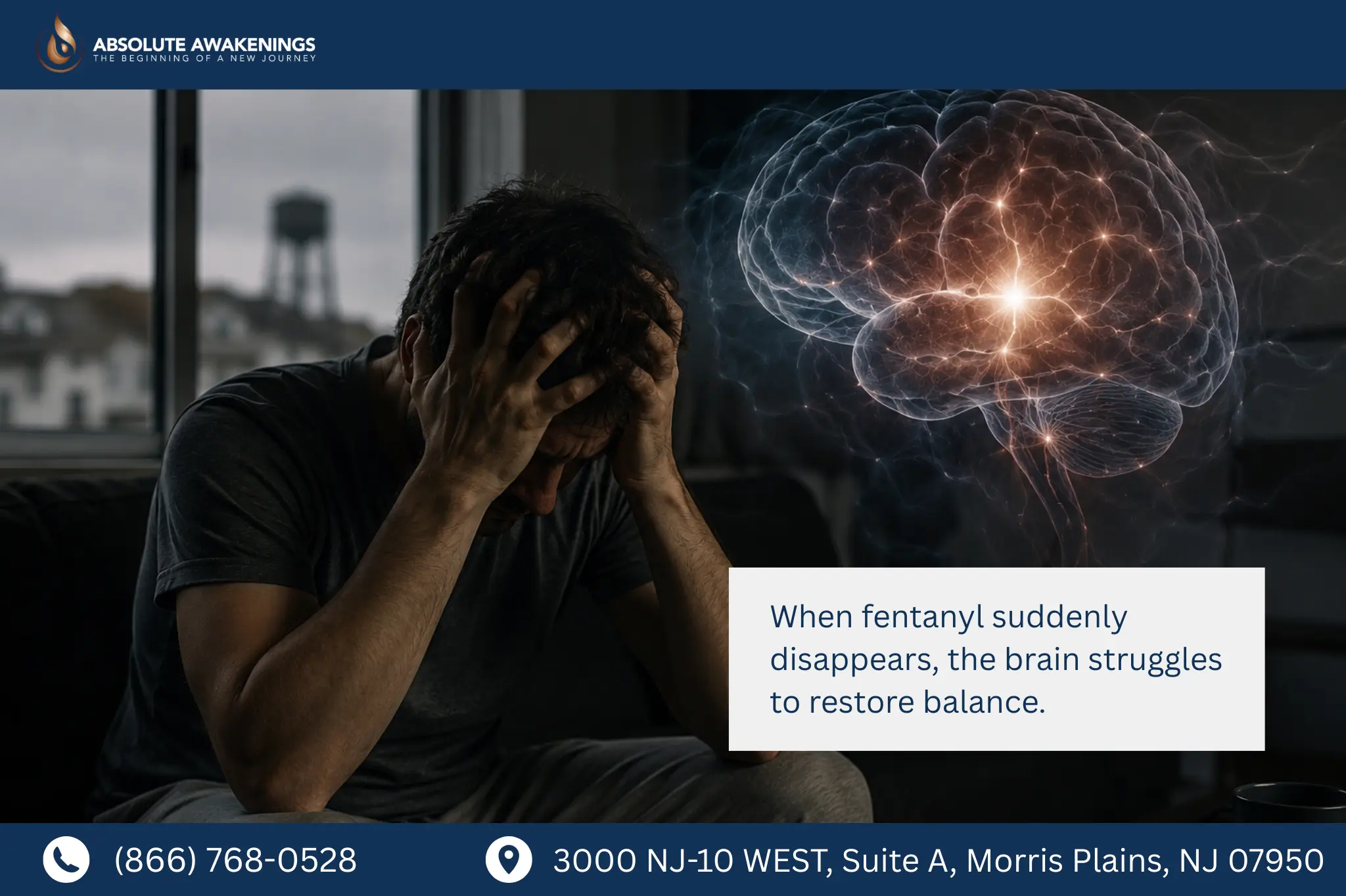
When fentanyl suddenly disappears, the brain struggles to restore balance.
This causes withdrawal.
The stronger the dependence, the more intense detox often becomes.
Learn more about how fentanyl addiction develops: Fentanyl Addiction Treatment
What Does Fentanyl Detox Actually Feel Like?
Many people describe fentanyl detox as having the worst flu of their life combined with intense anxiety and overwhelming cravings.
Some individuals compare it to:
- Having COVID and food poisoning at the same time
- Severe body aches that never stop
- Feeling unable to sit still
- Complete exhaustion while being unable to sleep
Everyone’s experience is different, but most people report both physical and emotional symptoms occurring together.
Physical Symptoms of Fentanyl Detox
During detox, the body works to eliminate fentanyl while adjusting to functioning without opioids.
Common Physical Symptoms
- Muscle pain
- Bone pain
- Sweating
- Chills
- Goosebumps
- Nausea
- Vomiting
- Diarrhea
- Stomach cramps
- Runny nose
- Watery eyes
- Tremors
- Rapid heartbeat
- High blood pressure
- Fatigue
Detection Signs Family Members May Notice
| Symptom | What You May Observe |
|---|---|
| Sweating | Clothes and sheets soaked |
| Restlessness | Constant pacing |
| Vomiting | Unable to keep food down |
| Diarrhea | Frequent bathroom trips |
| Tremors | Shaking hands |
| Insomnia | Staying awake for days |
Emotional Symptoms During Detox
The emotional symptoms often surprise people because they can feel just as intense as the physical ones.
Common symptoms include:
- Severe anxiety
- Depression
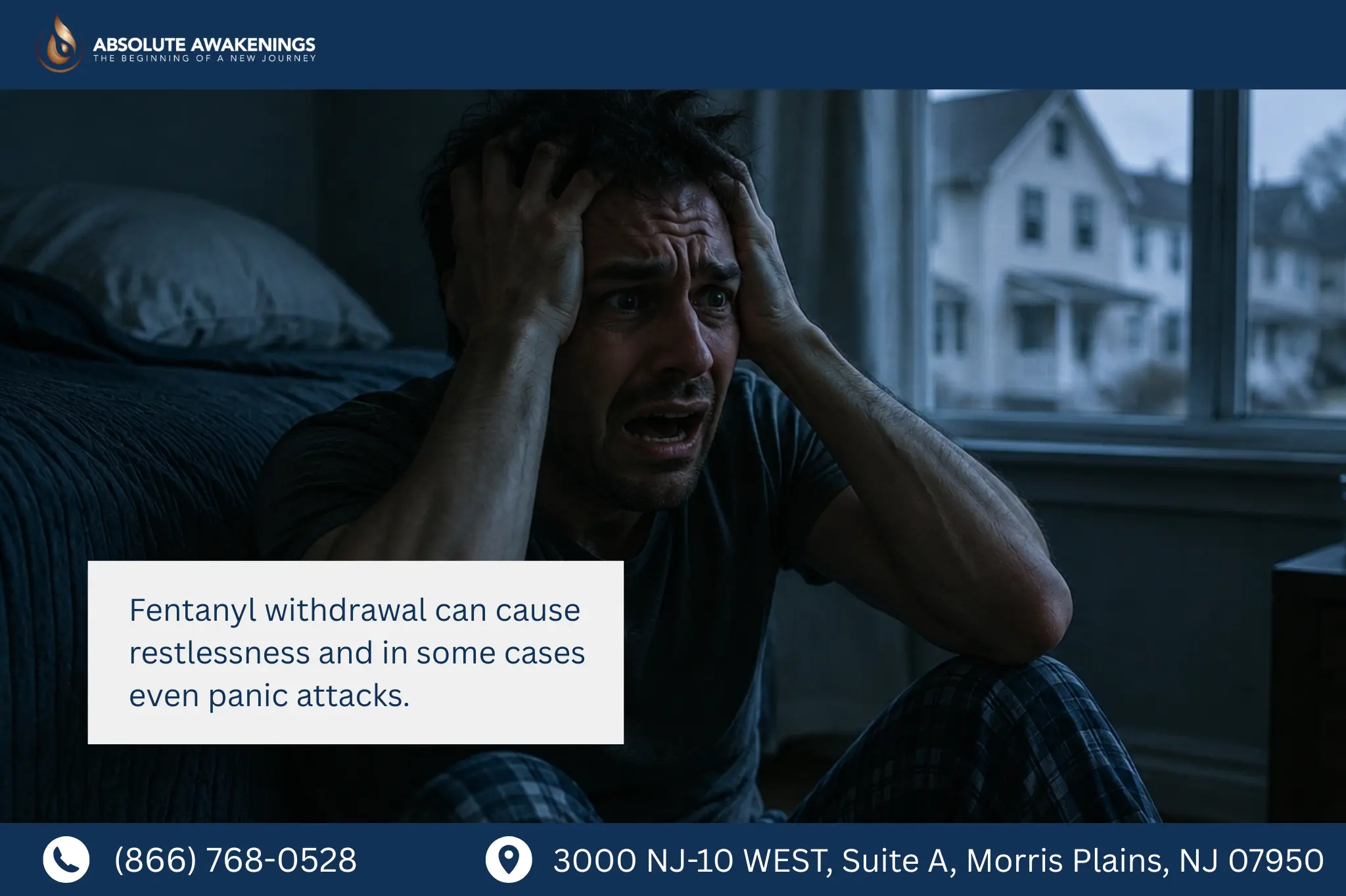
- Panic attacks
- Hopelessness
- Irritability
- Anger
- Difficulty concentrating
- Intense cravings
Many individuals say the emotional symptoms—not the physical pain—make relapse feel almost impossible to resist.
Day-by-Day Fentanyl Detox Timeline
First 6–24 Hours
Early withdrawal begins.
Symptoms often include:
- Anxiety
- Cravings
- Sweating
- Restlessness
- Yawning
- Runny nose
Many people mistake these symptoms for the flu.
Days 2–4
This is usually the most difficult stage.
Symptoms often include:
| Physical | Emotional |
|---|---|
| Vomiting | Panic |
| Muscle pain | Depression |
| Chills | Anxiety |
| Diarrhea | Cravings |
| Sweating | Irritability |
This is when most relapses occur.
For a complete timeline, read: Fentanyl Withdrawal Timeline: What to Expect Day by Day
Days 5–7
Most physical symptoms begin improving.
However:
- Sleep problems continue.
- Cravings remain intense.
- Mood swings become common.
Many people mistakenly believe they’re “better” and leave treatment too early.
Weeks 2–6
This stage is known as Post-Acute Withdrawal Syndrome (PAWS).
Symptoms may include:
- Low energy
- Depression
- Anxiety
- Sleep disturbances
- Difficulty concentrating
- Cravings
This is why detox alone rarely provides lasting recovery.
What Makes Detox Different for Everyone?
No two people experience fentanyl withdrawal exactly the same way.
Several factors influence detox severity.
| Factor | Effect on Withdrawal |
|---|---|
| Daily dosage | Higher doses often create stronger symptoms |
| Length of use | Long-term use usually extends withdrawal |
| Other drugs used | Alcohol and benzodiazepines increase complexity |
| Mental health | Anxiety and depression may worsen symptoms |
| Overall health | Chronic illness may slow recovery |
Can You Detox from Fentanyl at Home?
Technically, some people attempt it.
Unfortunately, many don’t finish.
Common reasons include:
- Cravings become unbearable.
- Pain becomes overwhelming.
- Lack of sleep causes emotional distress.
- Fear of withdrawal leads to relapse.
Professional detox isn’t just about comfort.
It’s about reducing the risk of relapse during the most vulnerable period.
Learn about our Medical Detox Program
Real-Life Case:
A 31-year-old man from Morris County decides to stop using fentanyl after nearly two years.
By the following morning, he begins sweating, pacing, and feeling anxious.
Within 48 hours, he’s vomiting repeatedly, unable to sleep, and experiencing severe muscle pain.
By day three, cravings become so intense that he considers using again simply to stop the symptoms.
Instead, his family helps him enter a medically supervised detox program where he receives clinical monitoring and support before transitioning into ongoing treatment.
Stories like this are common—and they highlight why seeking professional care early can make a significant difference.
Why Do So Many People Relapse During Fentanyl Detox?
One of the biggest misconceptions about recovery is that detox alone is enough to overcome addiction.
The reality is different.
Most relapses occur during or shortly after detox—not because someone lacks willpower, but because fentanyl changes the brain in ways that make cravings incredibly difficult to manage without ongoing treatment.
Several factors contribute to relapse:
- Intense physical cravings
- Anxiety and panic attacks
- Depression and hopelessness
- Lack of sleep
- Fear of withdrawal symptoms returning
- Returning to the same environment where drug use occurred
- Untreated trauma or mental health disorders
Perhaps the greatest danger comes after relapse.
When someone stops using fentanyl, even for a few days, their tolerance begins to decrease. If they return to the same amount they previously used, the risk of a fatal overdose increases significantly.
This is why addiction specialists often recommend continuing care immediately after detox rather than returning home without support.
Detox vs. Addiction Treatment: What’s the Difference?
Many people assume detox and rehab are the same thing.
They’re not.
| Medical Detox | Addiction Treatment |
|---|---|
| Helps manage withdrawal symptoms | Addresses the underlying causes of addiction |
| Focuses on physical stabilization | Focuses on emotional, psychological, and behavioral recovery |
| Usually lasts several days | May continue for weeks or months depending on individual needs |
| Reduces immediate withdrawal risks | Helps prevent relapse and supports long-term recovery |
Detox is the beginning of recovery—not the end.
At Absolute Awakenings, many individuals continue treatment through personalized addiction programs after completing detox.
Explore all treatment options available: https://absoluteawakenings.com/addiction-treatment-new-jersey/

What Happens After Fentanyl Detox?
Recovery is most successful when detox is followed by structured clinical care.
Depending on your needs, treatment may include:
Partial Hospitalization Program (PHP)
A highly structured level of care providing therapy during the day while allowing individuals to return to a supportive living environment afterward.
Intensive Outpatient Program (IOP)
Designed for individuals who have progressed beyond intensive treatment but still benefit from ongoing therapy and accountability.
Individual Therapy
One-on-one counseling helps identify the underlying causes of addiction, develop healthy coping skills, and reduce relapse risk.
Group Therapy
Sharing experiences with others facing similar challenges often reduces feelings of isolation and builds accountability.
Family Therapy
Addiction impacts the entire family. Family counseling can improve communication, rebuild trust, and strengthen long-term recovery.
When Should You Seek Professional Help?
Professional treatment should be considered if:
- You’ve tried quitting before but relapsed.
- Withdrawal symptoms become overwhelming.
- You’re using fentanyl daily.
- You’re mixing fentanyl with alcohol or other drugs.
- Your mental health is declining.
- Your relationships, work, or finances are being affected.
- You fear overdosing if you continue using.
The earlier treatment begins, the better the chances of long-term recovery.
Learn more about our specialized fentanyl addiction treatment
What Families Should Know About Fentanyl Detox
Watching someone go through withdrawal can be frightening.
Many families ask:
- “Should I let them detox at home?”
- “When should I call for help?”
- “How can I support them without enabling addiction?”
While every situation is unique, family members can play an important role by:
- Encouraging professional treatment
- Avoiding judgment or blame
- Monitoring for medical emergencies
- Helping remove access to drugs
- Participating in family therapy when appropriate
Supporting recovery doesn’t mean facing it alone.
Real Recovery Starts After the Hardest Days
The first week of detox often feels overwhelming.
But thousands of people recover from fentanyl addiction every year.
Recovery doesn’t happen overnight.
It happens one day, one decision, and one step at a time.
Many people who once believed they could never stop using fentanyl are now living healthy, productive lives because they received the right treatment and support.
Read real stories from individuals who have successfully rebuilt their lives after addiction.
Learn More About Fentanyl Recovery
If you’re researching fentanyl detox, these resources may also help answer common questions.
Fentanyl Withdrawal Timeline
Learn what happens during each stage of withdrawal, from the first few hours through the weeks that follow.
How Long Does Fentanyl Stay in Your System?
Understand detection windows, drug testing, and the factors that affect how long fentanyl remains in the body.
Signs of Fentanyl Addiction
Recognize the physical, behavioral, and emotional warning signs that may indicate someone needs professional help.
Does Fentanyl Last Longer Than Heroin?
Compare fentanyl and heroin, including how long they remain in the body, how they affect the brain, and why fentanyl is associated with a higher overdose risk.
Frequently Asked Questions (FAQs)
What does fentanyl detox feel like?
Most people describe fentanyl detox as experiencing severe flu-like symptoms combined with intense cravings, anxiety, muscle pain, nausea, insomnia, and emotional distress.
How long does fentanyl detox last?
Early withdrawal usually begins within 6–24 hours after the last dose. Symptoms often peak between days two and four before gradually improving over one to two weeks. Emotional symptoms and cravings may continue longer.
Is fentanyl detox dangerous?
Withdrawal itself is usually not fatal, but complications such as dehydration, relapse, and overdose after relapse can be extremely dangerous.
Can I detox from fentanyl without medical help?
Some people attempt to detox at home, but many relapse because withdrawal symptoms become overwhelming. Professional detox provides monitoring, support, and a safer transition into recovery.
What happens after detox?
Most people benefit from continuing treatment through therapy, relapse prevention planning, and structured addiction treatment programs that address the emotional and behavioral aspects of addiction.
Begin Your Recovery Journey in New Jersey
If you or someone you love is preparing to stop using fentanyl, remember this:
You don’t have to go through detox alone.
At Absolute Awakenings, we provide compassionate, evidence-based addiction treatment for individuals and families throughout:
- Morris Plains
- Morristown
- Parsippany
- Denville
- Morris County
- Essex County
- Bergen County
- Communities across New Jersey
Whether you’re experiencing withdrawal symptoms, exploring treatment options, or helping a loved one, our team is here to guide you every step of the way.
Learn more about the admissions process and verify your insurance.
Contact Absolute Awakenings
Address
3000 NJ-10, Suite A
Morris Plains, NJ 07950
Phone
(866) 768-0528
Taking the first step is often the hardest—but it can also be the beginning of lasting recovery.